Le citron devient basifiant une fois dans le corps humain !
Malgré son goût indéniablement acide qui fait grimacer, le citron se révèle être un allié basifiant pour notre corps.
Ce petit agrume jaune, souvent relégué au simple rôle de garniture ou d’assaisonnement, détient en réalité des pouvoirs alcalinisants étonnants lorsqu’il est métabolisé.
Alors, comment un fruit aussi acide peut-il être bénéfique à notre équilibre acido-basique ?
Dans les lignes qui suivent, nous allons explorer les mystères du citron, démystifier la confusion entre les perceptions gustatives et les réactions chimiques dans notre corps, et découvrir pourquoi intégrer le citron dans notre alimentation quotidienne pourrait être l’une des meilleures décisions pour notre santé.

Le citron, un agrume basifiant
Le citron est bien connu pour son goût distinctivement acide, une caractéristique qui découle de sa haute teneur en acide citrique.
Ce dernier confère au citron un pH bas, généralement autour de 2 à 3, ce qui le place clairement dans la catégorie des aliments acides si on se base uniquement sur son profil initial. Cependant, l’impact du citron sur le corps est tout autre que ce que son acidité initiale pourrait suggérer.
Lorsque consommé, le citron a un effet « basifiant » ou alcalinisant sur le corps.
Cela peut sembler contre-intuitif, mais la clé de cette transformation réside dans le processus métabolique.
Après digestion, les acides organiques forts contenus dans le citron, tels que l’acide citrique, sont rapidement métabolisés et éliminés, laissant derrière eux des minéraux basiques tels que le calcium, le magnésium et le potassium.
Ces minéraux contribuent à augmenter le pH des fluides corporels.
En outre, le citron stimule la production d’urée et d’autres bases naturelles dans le foie, aidant ainsi à neutraliser l’excès d’acidité dans le sang.
Ce processus aide à maintenir un équilibre sain du pH dans le corps, essentiel pour de nombreuses fonctions biologiques et pour éviter des conditions telles que l’acidose, où l’excès d’acidité peut mener à divers problèmes de santé.
Cette dualité entre l’acidité perçue du citron et son effet basifiant une fois métabolisé est un exemple parfait de la complexité des interactions alimentaires dans notre corps.
Comprendre cette différence entre « acide » et « basique » nous amène à notre prochain point : qu’est-ce qui distingue vraiment un aliment acide d’un aliment basique, et pourquoi est-ce important pour notre santé ?
La différence entre « acide » et « basique »
Dans le contexte de la nutrition et de la chimie, les termes « acide » et « basique » (ou alcalin) font référence à la nature du pH d’une substance.
Le pH, ou potentiel hydrogène, mesure le niveau d’acidité ou d’alcalinité d’une solution sur une échelle de 0 à 14.
Les substances avec un pH inférieur à 7 sont considérées comme acides, tandis que celles avec un pH supérieur à 7 sont dites basiques ou alcalines. L’eau pure, étant neutre, a un pH de 7.
Importance du pH dans le corps humain
Le corps humain fonctionne de manière optimale lorsque le pH de son sang reste légèrement alcalin, autour de 7,4. Un déséquilibre du pH, soit vers l’acidité soit vers l’alcalinité, peut affecter négativement les fonctions corporelles.
Par exemple, un environnement trop acide peut favoriser l’ostéoporose, l’arthrite, la fatigue, et même affecter la fonction immunitaire.
Inversement, un pH trop alcalin, bien que rare, peut également entraîner des complications comme la confusion, des tremblements ou des spasmes musculaires.
Comment les aliments influencent-ils le pH corporel ?
Les aliments que nous consommons peuvent influencer le pH de notre corps, bien que nos systèmes régulateurs travaillent dur pour maintenir un équilibre stable.
Les aliments acides comme les viandes, les céréales et les sucres simples tendent à produire des acides lors de leur digestion, ce qui peut abaisser le pH du corps.
À l’inverse, les aliments alcalins comme les fruits et légumes tendent à élever le pH corporel.
Il est important de noter que l’effet d’un aliment sur le pH du corps n’est pas directement lié à son pH initial.
Comme vu avec le citron, bien que naturellement acide, son effet métabolique est basifiant.
Cette distinction entre l’acidité perçue d’un aliment et son impact réel sur le pH corporel est cruciale pour comprendre comment maintenir un équilibre diététique sain.
Le bienfait du citron et des aliments alcalinisants
Le citron, malgré son acidité initiale, est célèbre pour ses nombreux bienfaits sur la santé, principalement dus à son effet alcalinisant post-digestion.
Riches en vitamine C, antioxydants et minéraux essentiels, les citrons peuvent jouer un rôle crucial dans la promotion d’une meilleure santé globale.
Avantages du citron pour la santé
- Renforcement du système immunitaire : La vitamine C, abondante dans les citrons, est vitale pour le fonctionnement efficace du système immunitaire. Elle aide à prévenir les infections et à accélérer la guérison.
- Amélioration de la digestion : Le citron stimule la production de bile par le foie, ce qui aide à améliorer la digestion. Cela peut réduire les symptômes d’indigestion et de constipation.
- Effet détoxifiant : Le citron favorise l’élimination des toxines dans le sang, aidant ainsi à maintenir la santé de la peau et à réduire le risque de maladies chroniques.
- Prévention des maladies : Les antioxydants dans les citrons peuvent réduire le stress oxydatif et l’inflammation, deux facteurs liés à une multitude de maladies chroniques comme les maladies cardiovasculaires et certains types de cancer.
Bienfaits des aliments alcalinisants

En dehors du citron, d’autres aliments alcalinisants incluent des légumes verts feuillus, des fruits, des noix et des graines. Consommer une variété de ces aliments peut avoir plusieurs avantages :
- Équilibre du pH corporel : Aider à neutraliser l’excès d’acide dans le corps et promouvoir un environnement interne plus alcalin.
- Santé osseuse : Les minéraux alcalins comme le calcium et le magnésium sont essentiels pour le maintien de la santé des os.
- Amélioration de l’énergie et de la vitalité : Un corps bien équilibré sur le plan du pH est plus efficace pour produire de l’énergie et gérer la fatigue.
Inclure le citron et d’autres aliments alcalinisants dans son régime alimentaire est une stratégie simple et efficace pour améliorer la santé générale.
Intégrer le citron dans son alimentation quotidienne
Incorporer le citron dans votre alimentation quotidienne est une manière simple et efficace d’exploiter ses bienfaits alcalinisants.
Voici plusieurs méthodes pratiques pour augmenter votre consommation de cet agrume polyvalent et bénéfique :
1. Commencer la journée avec de l’eau citronnée
Un des moyens les plus populaires d’utiliser le citron est de boire de l’eau tiède avec du jus de citron frais chaque matin.
Cette pratique stimule la digestion et offre un coup de pouce alcalinisant pour commencer la journée. Il suffit de presser le jus d’un demi-citron dans un verre d’eau tiède.

2. Assaisonnement dans les salades
Utiliser le citron comme assaisonnement pour les salades est une excellente alternative aux vinaigrettes commerciales souvent acides ou chargées en sucre.
Le jus de citron, mélangé à un peu d’huile d’olive, du sel, et des herbes fraîches, crée une vinaigrette simple, saine, et riche en saveur.
3. Ajout à des boissons et smoothies
Incorporer quelques tranches de citron ou du jus de citron dans vos boissons et smoothies peut non seulement améliorer le goût mais aussi augmenter la valeur nutritive.
Le citron se marie particulièrement bien avec des smoothies verts, augmentant leur potentiel alcalinisant.
4. Utilisation en cuisine
Le citron peut être utilisé dans une variété de plats, des sauces pour pâtes aux marinades pour poissons et viandes.
Son acidité naturelle peut rehausser le goût des aliments et remplacer le sel, ce qui contribue à réduire la consommation globale de sodium.
5. En remplacement de vinaigre
Dans les recettes qui demandent du vinaigre, comme dans certaines soupes ou lors de la préparation de légumes marinés, substituer le vinaigre par du citron peut non seulement apporter un goût frais, mais aussi réduire l’acidité du plat.
Inclure régulièrement le citron dans votre alimentation peut être une manière délicieuse et rafraîchissante de favoriser un équilibre alcalin dans le corps.
Cependant, le citron n’est pas le seul aliment à posséder des propriétés basifiantes.
Explorer d’autres aliments basifiants peut enrichir votre régime alimentaire et renforcer votre santé générale.
À part le citron, quels sont les autres aliments basifiants
Bien que le citron soit un excellent choix pour favoriser un environnement corporel plus alcalin, de nombreux autres aliments peuvent également contribuer à cet équilibre.
Intégrer une variété d’aliments basifiants dans votre alimentation peut aider à optimiser la santé globale et à maintenir l’équilibre acido-basique du corps.
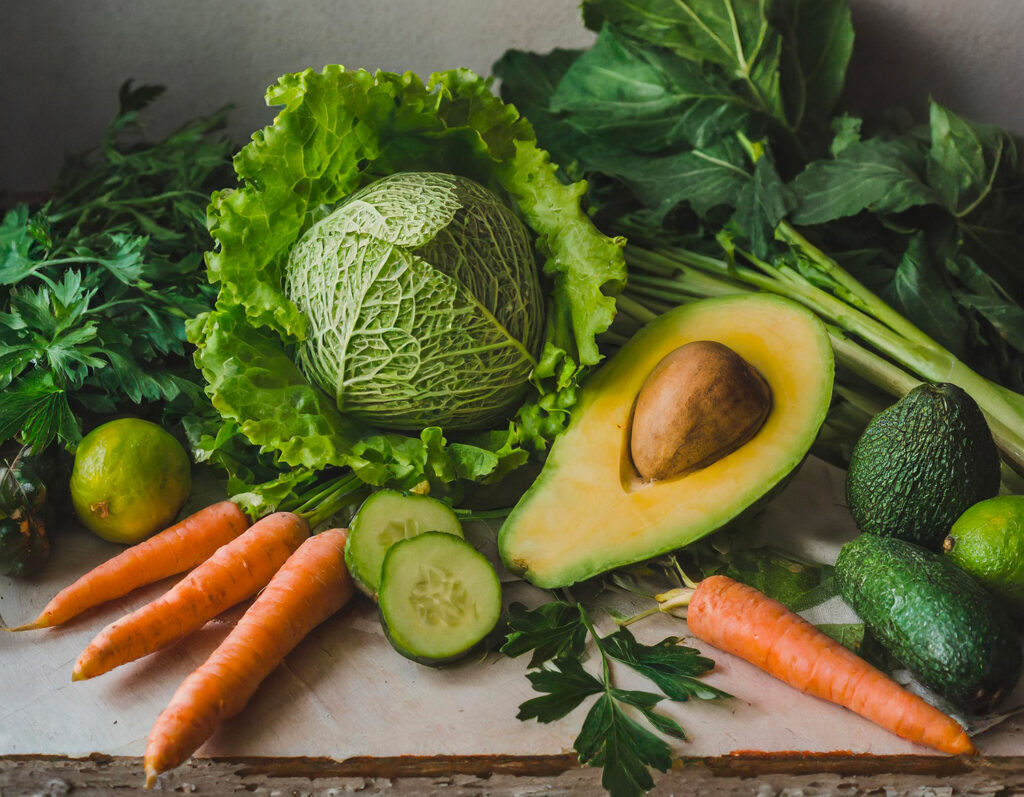
Voici une liste d’autres aliments alcalinisants bénéfiques :
1. Légumes verts feuillus
Les légumes verts feuillus, tels que les épinards, le kale, et la roquette, sont parmi les aliments les plus alcalinisants. Riches en minéraux comme le calcium et le magnésium, ils aident à neutraliser les acides dans le corps et à améliorer la santé globale.
Pour les enfants, il peut être difficile de les encourager à consommer des légumes verts. C’est pourquoi nous vous proposons quatre astuces efficaces pour aider vos enfants à manger des légumes !
2. Concombres
Les concombres sont non seulement hydratants en raison de leur teneur élevée en eau, mais ils possèdent également un effet alcalinisant qui peut aider à réguler le pH corporel.
3. Avocats
Les avocats sont une excellente source de graisses saines, de fibres et de minéraux alcalins. Ils sont particulièrement bénéfiques pour la santé cardiaque et la digestion.
4. Bananes
Mûres, les bananes sont alcalinisantes et offrent une bonne dose de potassium, ce qui est essentiel pour maintenir un équilibre électrolytique sain et un pH corporel optimal.
5. Carottes
Les carottes sont non seulement bonnes pour la vue en raison de leur haute teneur en bêta-carotène, mais elles sont aussi alcalinisantes et peuvent aider à améliorer la digestion et réduire l’acidité.
6. Amandes
Les amandes sont une autre excellente source de minéraux alcalins. Elles peuvent être consommées crues, en beurre d’amande, ou utilisées en tant qu’ingrédient dans divers plats et pâtisseries.
Si vous souhaitez integrer de la poudre d’amande à vos recettes nous avous invitons à découvrir notre article sur comment faire de la poudre d’amandes, un guide simple et efficace !
7. Melon
Le melon, en raison de sa teneur élevée en eau et en minéraux, est très alcalinisant. Il aide à hydrater et à purifier le système digestif.
8. Herbes fraîches
Les herbes fraîches comme le persil, la coriandre, le basilic, et le thym ne sont pas seulement des superstars culinaires, elles possèdent aussi des propriétés alcalinisantes qui peuvent renforcer l’immunité et améliorer la santé.
Incorporer ces aliments dans votre régime quotidien peut aider à diversifier les sources de nutriments tout en renforçant les effets basifiants de votre alimentation.
Choisir des aliments alcalinisants variés permet de profiter d’un large éventail de bénéfices pour la santé, tout en maintenant un régime équilibré et plaisant.
En adoptant ces habitudes alimentaires, vous pourrez optimiser votre bien-être général et soutenir les fonctions vitales de votre corps.