Alors que le Ramadan 2024 approche à grands pas, marquant une période de réflexion, de jeûne et de communauté, il est essentiel de se préparer adéquatement pour ce mois sacré.
Prévu pour débuter aux alentours du 10 mars et se conclure le 9 avril, le Ramadan est un moment particulier pour des millions de musulmans à travers le monde, dédié au jeûne, à la prière et à la solidarité.
Ce mois sacré, au-delà de son importance spirituelle, pose un défi unique en termes de nutrition et de gestion des repas.
Comment assurer une alimentation équilibrée tout en respectant les rituels du jeûne du lever au coucher du soleil ? C’est ici que notre guide « Planning repas Ramadan » intervient.
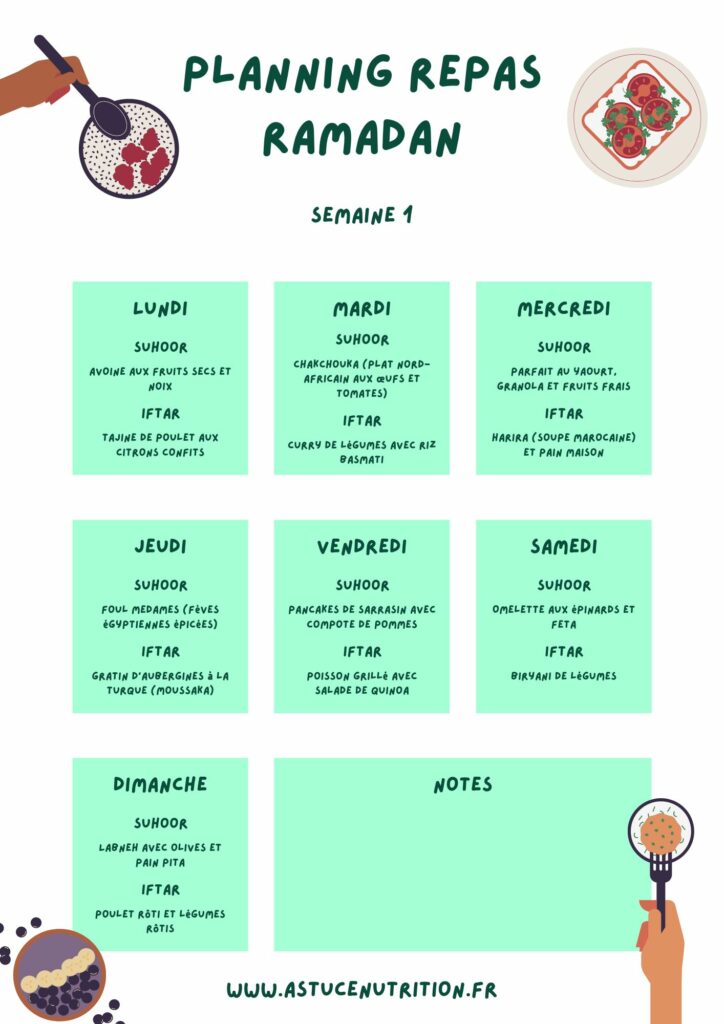
Nous vous proposons dans cet article un plan de repas hebdomadaires spécialement conçus pour le Ramadan 2024.
Ce planning n’est pas seulement un guide pour vous aider à organiser vos repas de Suhoor (repas avant l’aube) et d’Iftar (repas pour rompre le jeûne), mais il est aussi pensé pour vous assurer une nutrition optimale pendant ce mois exigeant.
Un planning hebdomadaire complet pour le Ramadan
Pour une expérience du Ramadan équilibrée et enrichissante, nous vous proposons un planning hebdomadaire complet, mélangeant des plats traditionnels de différentes cultures, y compris maghrébins, pour couvrir toute la durée du mois sacré.
Semaine 1
Suhoor
- Lundi : Avoine aux fruits secs et noix.
- Mardi : Chakchouka (plat nord-africain aux œufs et tomates).
- Mercredi : Parfait au yaourt, granola et fruits frais.
- Jeudi : Foul medames (fèves égyptiennes épicées).
- Vendredi : Pancakes de sarrasin avec compote de pommes.
- Samedi : Omelette aux épinards et feta.
- Dimanche : Labneh avec olives et pain pita.
Iftar
- Lundi : Tajine de poulet aux citrons confits.
- Mardi : Curry de légumes avec riz basmati.
- Mercredi : Harira (soupe marocaine) et pain maison.
- Jeudi : Gratin d’aubergines à la turque (Moussaka).
- Vendredi : Poisson grillé avec salade de quinoa.
- Samedi : Biryani de légumes.
- Dimanche : Poulet rôti et légumes rôtis.
Semaine 2
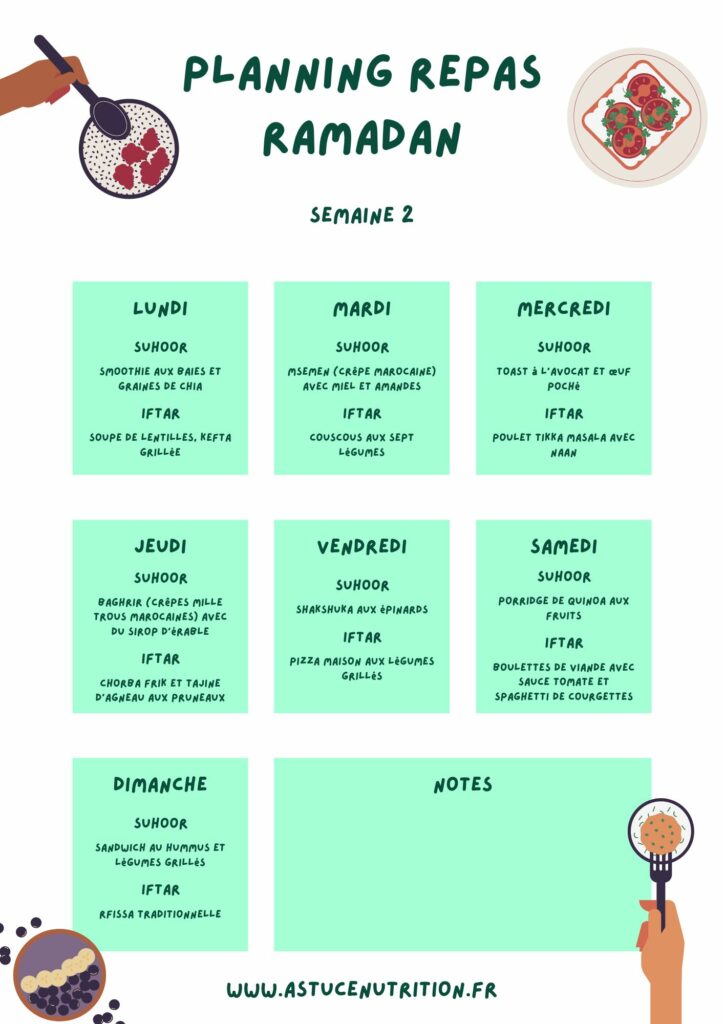
Suhoor
- Lundi : Smoothie aux baies et graines de chia.
- Mardi : Msemen (crêpe marocaine) avec miel et amandes.
- Mercredi : Toast à l’avocat et œuf poché.
- Jeudi : Baghrir (crêpes mille trous marocaines) avec du sirop d’érable.
- Vendredi : Shakshuka aux épinards.
- Samedi : Porridge de quinoa aux fruits.
- Dimanche : Sandwich au hummus et légumes grillés.
Iftar
- Lundi : Soupe de lentilles, kefta grillée.
- Mardi : Couscous aux sept légumes.
- Mercredi : Poulet Tikka Masala avec naan.
- Jeudi : Chorba frik et tajine d’agneau aux pruneaux.
- Vendredi : Pizza maison aux légumes grillés.
- Samedi : Boulettes de viande avec sauce tomate et spaghetti de courgettes.
- Dimanche : Rfissa traditionnelle.
Semaine 3
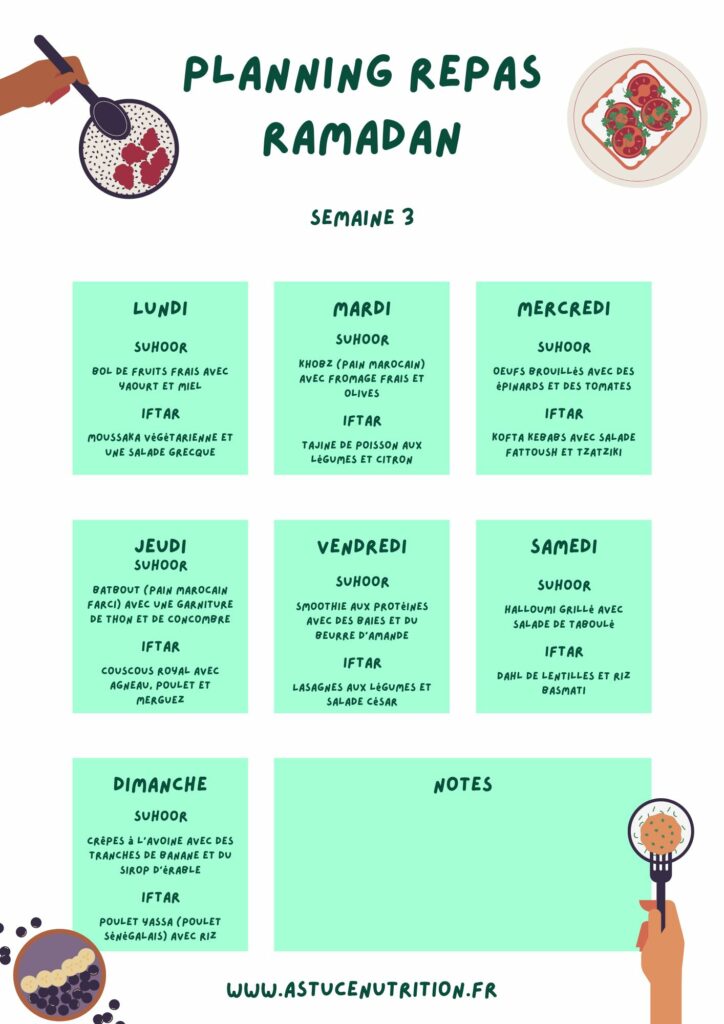
Suhoor
- Lundi : Bol de fruits frais avec yaourt et miel.
- Mardi : Khobz (pain marocain) avec fromage frais et olives.
- Mercredi : Oeufs brouillés avec des épinards et des tomates.
- Jeudi : Batbout (pain marocain farci) avec une garniture de thon et de concombre.
- Vendredi : Smoothie aux protéines avec des baies et du beurre d’amande.
- Samedi : Halloumi grillé avec salade de taboulé.
- Dimanche : Crêpes à l’avoine avec des tranches de banane et du sirop d’érable.
Iftar
- Lundi : Moussaka végétarienne et une salade grecque.
- Mardi : Tajine de poisson aux légumes et citron.
- Mercredi : Kofta kebabs avec salade fattoush et tzatziki.
- Jeudi : Couscous royal avec agneau, poulet et merguez.
- Vendredi : Lasagnes aux légumes et salade César.
- Samedi : Dahl de lentilles et riz basmati.
- Dimanche : Poulet Yassa (poulet sénégalais) avec riz.
Semaine 4
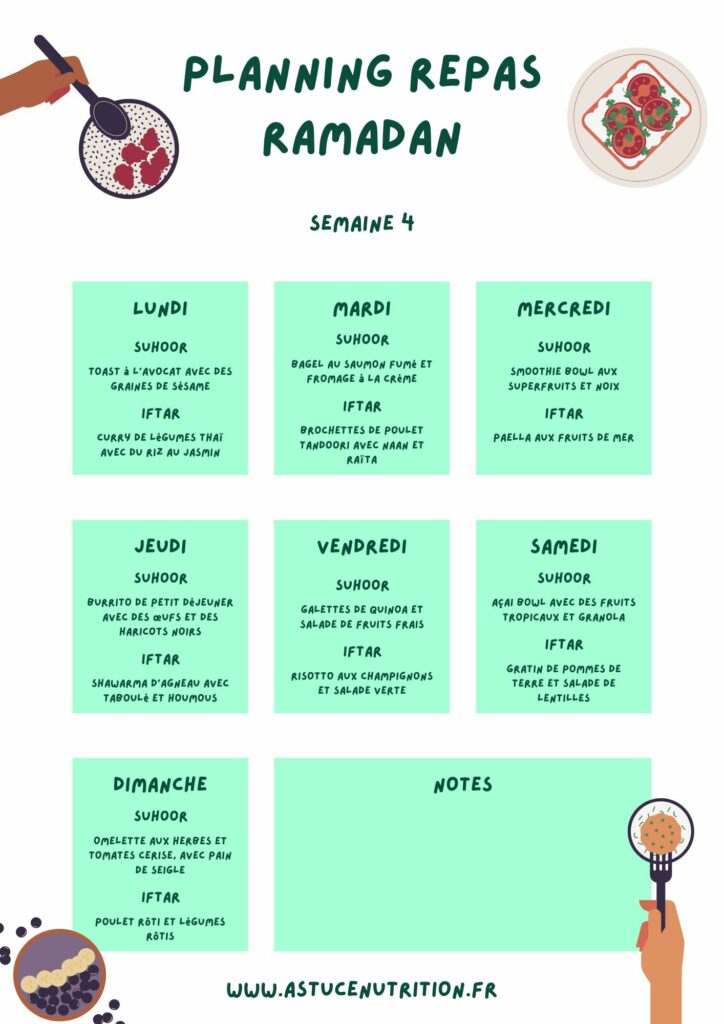
Suhoor
- Lundi : Toast à l’avocat avec des graines de sésame.
- Mardi : Bagel au saumon fumé et fromage à la crème.
- Mercredi : Smoothie bowl aux superfruits et noix.
- Jeudi : Burrito de petit déjeuner avec des œufs et des haricots noirs.
- Vendredi : Galettes de quinoa et salade de fruits frais.
- Samedi : Açai bowl avec des fruits tropicaux et granola.
- Dimanche : Omelette aux herbes et tomates cerise, avec pain de seigle.
Iftar
- Lundi : Curry de légumes Thaï avec du riz au jasmin.
- Mardi : Brochettes de poulet tandoori avec naan et raïta.
- Mercredi : Paella aux fruits de mer.
- Jeudi : Shawarma d’agneau avec taboulé et houmous.
- Vendredi : Risotto aux champignons et salade verte.
- Samedi : Gratin de pommes de terre et salade de lentilles.
- Dimanche : Poulet rôti et légumes rôtis.
Semaine 5
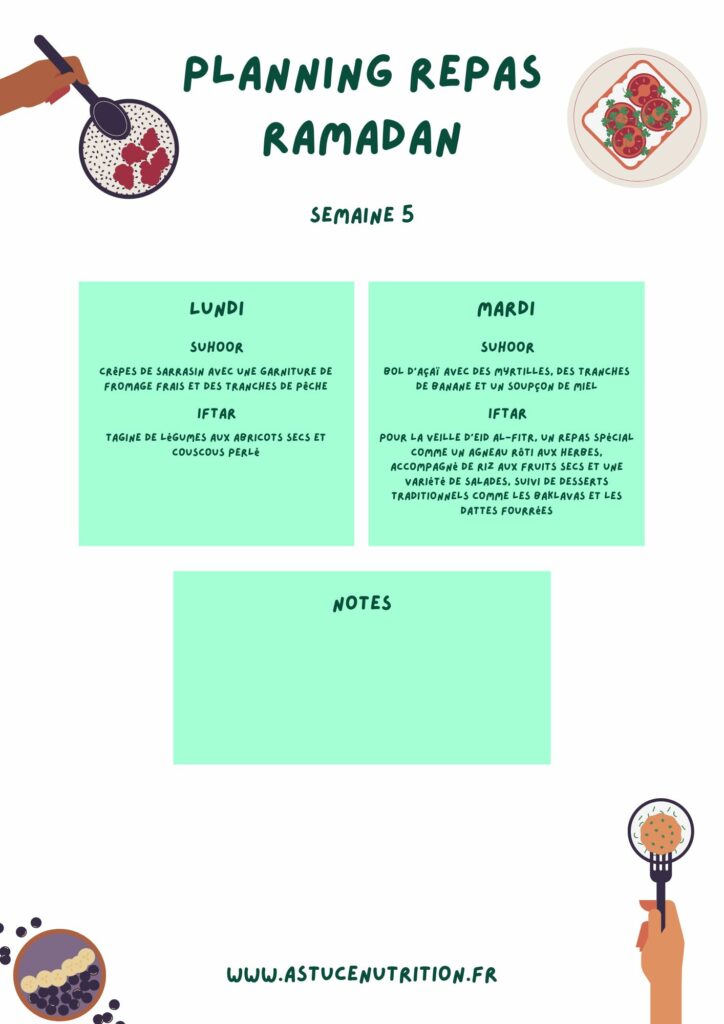
Suhoor
- Lundi : Crêpes de sarrasin avec une garniture de fromage frais et des tranches de pêche.
- Mardi : Bol d’açaï avec des myrtilles, des tranches de banane et un soupçon de miel.
Iftar
- Lundi : Tagine de légumes aux abricots secs et couscous perlé.
- Mardi : Pour la veille d’Eid al-Fitr, un repas spécial comme un agneau rôti aux herbes, accompagné de riz aux fruits secs et une variété de salades, suivi de desserts traditionnels comme les baklavas et les dattes fourrées.
Aliments et boissons essentiels pour un bon planning durant le Ramadan
Durant le mois sacré du Ramadan, choisir les bons aliments et boissons dans son planing de repas est crucial pour maintenir une bonne santé, une hydratation adéquate et une énergie soutenue.
Voici une liste des types d’aliments et de boissons à privilégier, accompagnée de quelques conseils pour éviter la déshydratation, assurer une énergie constante et maintenir une nutrition équilibrée.
Hydratation
Eau : La base de l’hydratation. Il est recommandé de boire beaucoup d’eau entre l’Iftar et le Suhoor pour éviter la déshydratation durant la journée. Pour les adolescents, il est crucial de faire particulièrement attention à la quantité d’eau consommée.
Soupes : Les soupes, en particulier celles à base de bouillon, sont une excellente façon de commencer l’Iftar. Elles aident à réhydrater le corps et sont une source douce d’énergie.
Thé : Une boisson traditionnelle dans de nombreuses cultures durant le Ramadan. Le thé, en particulier le thé vert ou le thé à la menthe, peut être une excellente option pour la réhydratation et la détente après l’Iftar.
Il est cependant important de noter que le thé contient de la caféine, qui peut avoir un effet diurétique (fait d’uriner plus souvent).
Il est donc conseillé de le consommer avec modération et de privilégier l’eau pour la majorité de vos besoins en hydratation.
Jus naturels et smoothies : Les jus frais et les smoothies à base de fruits et légumes offrent non seulement une hydratation, mais aussi des vitamines et minéraux essentiels.
Énergie soutenue
Céréales complètes : Choisissez des aliments à base de céréales complètes comme le pain complet ou le pain Viking, le riz brun et le quinoa. Ces aliments fournissent des glucides complexes pour une libération d’énergie prolongée.
Fruits à faible indice glycémique : Les fruits comme les baies, les pommes et les poires fournissent des sucres naturels qui aident à maintenir des niveaux d’énergie stables.
Protéines de qualité : Incluez des sources de protéines comme le poulet, le poisson, les œufs (qui ne sont pas mauvais pour le foie), et les légumineuses. Les protéines contribuent à la sensation de satiété et à la réparation musculaire.
Nutriments essentiels
Légumes : Riches en fibres, vitamines et minéraux, les légumes devraient être un élément central de vos repas. Ils aident à la digestion et apportent des nutriments essentiels.
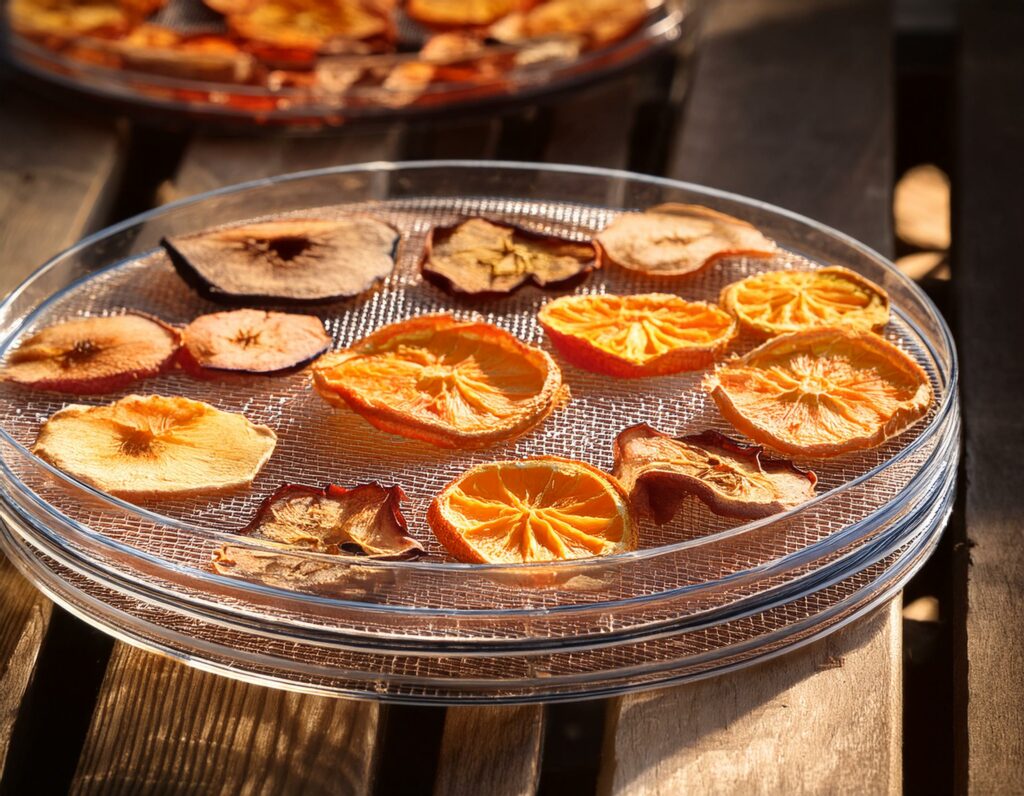
Fruits secs et noix : Excellente source de fibres, de protéines et de graisses saines, les noix et les fruits secs sont parfaits pour un snack nutritif. Apprenez à déshydrater vos fruits.
Produits laitiers : Le lait, le yaourt et le fromage fournissent du calcium et des protéines. Optez pour des versions faibles en graisse pour maintenir un équilibre nutritionnel.
Conseils pour une nutrition équilibrée
- Variez vos sources de nourriture : Assurez-vous d’inclure une variété d’aliments dans votre régime pour obtenir un éventail complet de nutriments.
- Attention aux portions : Même si le jeûne peut donner envie de manger beaucoup lors de l’Iftar, il est important de contrôler les portions pour éviter la suralimentation.
- Préparez des repas équilibrés : Chaque repas devrait contenir un bon équilibre de protéines, de glucides et de lipides, ainsi que des fruits et légumes.
En suivant ces conseils, vous pouvez assurer une alimentation équilibrée et saine durant le Ramadan, en évitant les problèmes courants comme la déshydratation et la baisse d’énergie, tout en profitant des repas et en respectant les traditions de ce mois sacré.
Autres idées de recettes pour varier votre planning repas durant le Ramadan
Diversifier les repas durant le Ramadan est essentiel pour maintenir l’intérêt et s’assurer que tous les besoins nutritionnels sont couverts.
Voici quelques idées de recettes alternatives, adaptées à différents goûts et besoins alimentaires, y compris végétarien, sans gluten et rapide à préparer.
Recettes rapides à préparer
- Quesadillas aux légumes : tortillas garnies de fromage, poivrons, oignons et champignons, rapidement grillées.
- Salade niçoise : salade composée de thon, œufs durs, haricots verts, tomates et olives, avec une vinaigrette légère.
- Omelette aux champignons et herbes : omelette moelleuse aux champignons frais, ciboulette et persil.
- Pâtes à l’Arrabiata : pâtes al dente avec une sauce tomate piquante, ail et piments rouges.
- Tacos de poisson : tacos avec du poisson grillé, salade de chou et une sauce crème à la lime.
Recettes végétariennes
- Couscous aux légumes rôtis : couscous garni de légumes rôtis comme des aubergines, des poivrons et des courgettes, relevé avec des herbes fraîches.
- Ratatouille : classique français composé de tomates, aubergines, courgettes et poivrons, mijoté avec des herbes de Provence.
- Burger de falafels : falafels maison servis dans un pain pita avec de la salade, des tomates et une sauce tahini.
- Lasagnes aux épinards et ricotta : lasagnes végétariennes alternant couches d’épinards, ricotta, sauce tomate et pâtes.
- Chilli végétarien : un chili sans viande, riche en haricots, maïs, poivrons et épices, accompagné de riz ou de pain.
Recettes sans gluten
- Risotto aux champignons : risotto crémeux aux champignons et parmesan, cuit lentement pour une texture parfaite.
- Salade de quinoa aux agrumes et avocat : quinoa mélangé avec des segments d’orange, avocat, amandes et une vinaigrette légère.
- Poêlée de crevettes à l’ail et au citron : crevettes sautées avec de l’ail, du citron et du persil, servies sur un lit de riz ou de légumes grillés.
- Soupe de courge butternut et carottes : soupe onctueuse de courge et carottes, agrémentée de crème de coco et d’épices douces.
- Brochettes de poulet mariné au yaourt : poulet tendre mariné au yaourt et épices, grillé et servi avec une salade fraîche.