Lorsqu’il s’agit de comprendre l’impact des aliments sur notre poids, les légumineuses sont souvent sujettes à de nombreux malentendus.
Beaucoup de personnes se demandent : les légumineuses font-elles grossir ?
La réponse est simple : non, les légumineuses ne font pas grossir lorsqu’elles sont consommées de manière modérée et équilibrée. En fait, elles peuvent même être de précieux alliés dans une démarche de perte de poids.
Riches en fibres, en protéines et en nutriments essentiels, les légumineuses possèdent de nombreuses vertus qui favorisent la satiété, stabilisent la glycémie et apportent une énergie durable.
Leur densité nutritionnelle élevée signifie que même de petites portions peuvent fournir une quantité significative de nutriments, ce qui peut aider à éviter les fringales et à contrôler l’apport calorique global.
Dans cet article, nous allons explorer en détail pourquoi et comment les légumineuses peuvent non seulement ne pas contribuer à la prise de poids, mais aussi vous aider à en perdre.
Préparez-vous à découvrir les multiples bienfaits des légumineuses et à réviser vos idées reçues sur ces aliments incroyablement nutritifs !
Avant de parler de la perte ou prise de poids, parlons des légumineuses
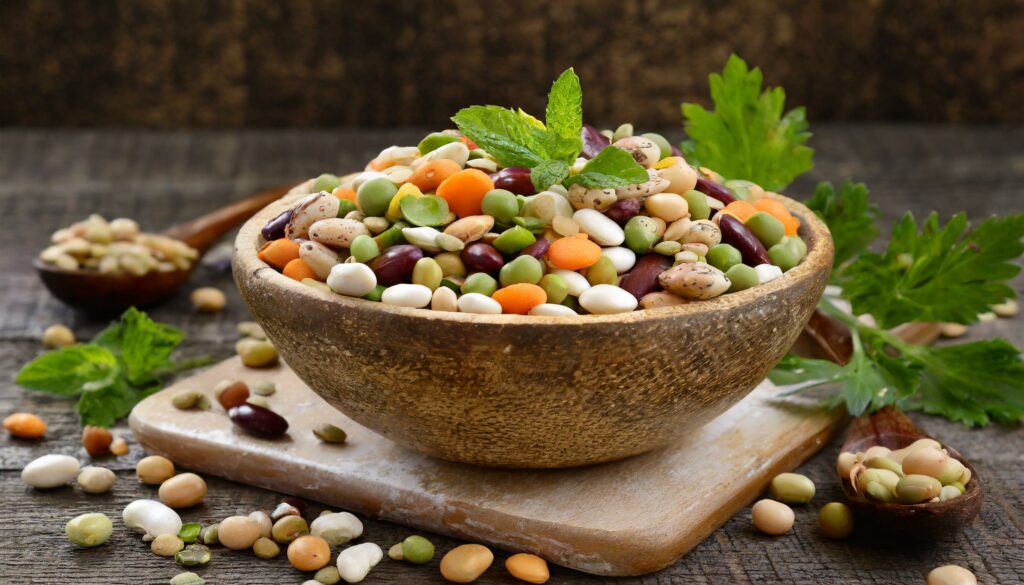
Les légumineuses, également connues sous le nom de légumes secs, sont un groupe d’aliments très variés qui incluent des haricots, des lentilles, des pois et des pois chiches.
Elles sont consommées depuis des millénaires et sont une source essentielle de nutrition dans de nombreuses cultures à travers le monde.
Les légumineuses sont les graines comestibles de plantes de la famille des Fabaceae. Elles se caractérisent par leur richesse en protéines végétales, en fibres alimentaires, en vitamines et en minéraux.
Parmi les légumineuses les plus couramment consommées, on trouve :
- Les haricots (noirs, rouges, blancs, etc.)
- Les lentilles (vertes, brunes, rouges, jaunes)
- Les pois (pois cassés, pois chiches)
- Les fèves (fèves, edamame)
Les légumineuses sont des aliments à haute densité nutritionnelle, ce qui signifie qu’elles fournissent une grande quantité de nutriments pour un apport calorique relativement faible.
Voici quelques-uns des principaux nutriments trouvés dans les légumineuses :
- Protéines : Les légumineuses sont une excellente source de protéines végétales, essentielles pour la croissance et la réparation des tissus.
- Fibres alimentaires : Elles contiennent des fibres solubles et insolubles qui aident à la digestion et à la régulation de la glycémie.
- Vitamines : Les légumineuses sont riches en vitamines B, comme la vitamine B12, et notamment en folate, qui est crucial pour la formation des globules rouges et la santé du système nerveux.
- Minéraux : Elles fournissent des minéraux essentiels tels que le fer, le magnésium, le potassium et le zinc.
Comment les légumineuses vous aident à ne pas grossir
Les légumineuses peuvent être des alliées précieuses pour ceux qui cherchent à maintenir ou perdre du poids.
Leur composition nutritionnelle unique offre plusieurs avantages qui contribuent à la gestion du poids.
Voici comment les légumineuses vous aident à ne pas grossir :
Riches en fibres alimentaires
Les fibres jouent un rôle crucial dans la gestion du poids.
Les légumineuses sont particulièrement riches en fibres solubles et insolubles, ce qui offre plusieurs avantages :
- Satiété prolongée : Les fibres augmentent la sensation de satiété, réduisant ainsi les fringales et les envies de grignoter entre les repas.
- Régulation de la digestion : Elles favorisent une digestion saine et régulière, ce qui est essentiel pour un métabolisme efficace.
- Contrôle de la glycémie : Les fibres solubles aident à ralentir l’absorption des sucres dans le sang, ce qui évite les pics de glycémie et les baisses d’énergie soudaines.
Indice glycémique bas
L’indice glycémique (IG) mesure la vitesse à laquelle un aliment augmente le taux de sucre dans le sang.
Les légumineuses ont un indice glycémique bas, ce qui signifie qu’elles libèrent leur énergie lentement et de manière stable :
- Énergie durable : Une libération lente de l’énergie aide à maintenir des niveaux d’énergie stables tout au long de la journée, réduisant ainsi les besoins en collations sucrées ou riches en calories.
- Réduction du stockage des graisses : En évitant les pics de glycémie, le corps est moins susceptible de stocker l’excès de sucre sous forme de graisse.
Riche en protéines végétales
Les légumineuses sont une excellente source de protéines végétales, essentielles pour une alimentation équilibrée :
- Satiété accrue : Les protéines contribuent également à la sensation de satiété, aidant à contrôler l’appétit.
- Maintien de la masse musculaire : Les protéines sont nécessaires pour la réparation et la croissance des muscles, ce qui est important pour maintenir un métabolisme actif.
- Faible en calories : Comparées à d’autres sources de protéines, comme la viande rouge, les légumineuses sont souvent moins caloriques, ce qui permet de réduire l’apport calorique global sans sacrifier les besoins nutritionnels.
Faible en graisses
La plupart des légumineuses sont naturellement faibles en graisses, en particulier en graisses saturées :
- Réduction de l’apport calorique : En étant faibles en graisses, les légumineuses permettent de réduire l’apport calorique total, facilitant ainsi la perte de poids.
- Santé cardiovasculaire : Une faible consommation de graisses saturées est bénéfique pour la santé du cœur, ce qui est un avantage supplémentaire des légumineuses.
Effet thermique des aliments
Le processus de digestion des légumineuses nécessite une dépense énergétique plus élevée, connue sous le nom d’effet thermique des aliments, ce qui peut légèrement augmenter le métabolisme et aider à brûler plus de calories.
Les meilleures légumineuses pour les moins aux plus caloriques
Il est important de choisir les légumineuses en fonction de leur apport calorique, surtout si l’objectif est de gérer ou de perdre du poids.
Voici un tableau des légumineuses courantes classées de la moins calorique à la plus calorique, basé sur leur teneur en calories pour 100 grammes.
| Légumineuse | Calories (kcal) pour 100g |
|---|---|
| Haricots verts | 31 |
| Pois mange-tout | 42 |
| Haricots mungo | 63 |
| Pois cassés | 81 |
| Lentilles rouges | 116 |
| Lentilles vertes | 118 |
| Pois chiches | 164 |
| Haricots noirs | 132 |
| Haricots rouges | 127 |
| Fèves | 110 |
| Edamame | 121 |
| Haricots blancs | 139 |
| Haricots pinto | 143 |
| Haricots adzuki | 128 |
| Haricots de Lima | 113 |
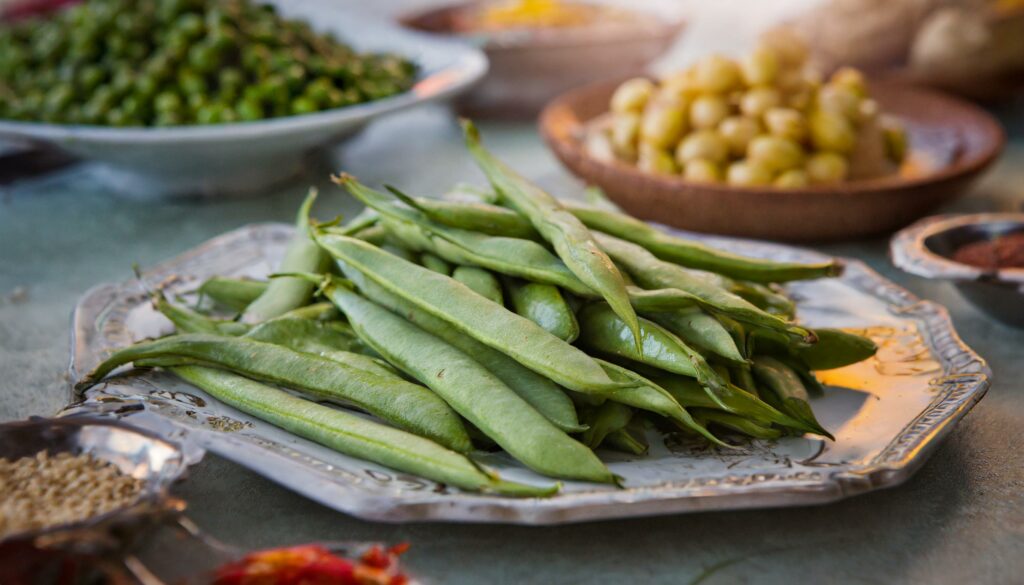
- Haricots verts (31 kcal pour 100g) : Très faibles en calories et riches en fibres, les haricots verts sont parfaits pour les collations ou les plats d’accompagnement.
- Pois mange-tout (42 kcal pour 100g) : Faibles en calories et contenant des vitamines essentielles, les pois mange-tout sont idéaux pour les salades et les sautés.
- Haricots mungo (63 kcal pour 100g) : Ces haricots sont non seulement faibles en calories, mais aussi riches en protéines, ce qui les rend parfaits pour les soupes et les currys.
- Pois cassés (81 kcal pour 100g) : Excellents pour les soupes épaisses, les pois cassés sont une bonne source de fibres et de protéines.
- Lentilles rouges (116 kcal pour 100g) : Rapides à cuire et très nutritives, les lentilles rouges sont idéales pour les soupes et les ragoûts.
- Lentilles vertes (118 kcal pour 100g) : Riches en fibres et protéines, les lentilles vertes sont polyvalentes et peuvent être utilisées dans une variété de plats.
- Pois chiches (164 kcal pour 100g) : Ingrédient de base pour l’houmous et les salades, les pois chiches sont riches en protéines et en fibres, ce qui en fait un excellent choix pour les repas rassasiants.
- Haricots noirs (132 kcal pour 100g) : Populaires dans la cuisine latino-américaine, ils sont riches en fibres et en protéines, parfaits pour les soupes et les ragoûts.
- Haricots rouges (127 kcal pour 100g) : Souvent utilisés dans les chilis et les plats mijotés, les haricots rouges sont nutritifs et rassasiants.
- Fèves (110 kcal pour 100g) : Utilisées dans de nombreuses cuisines méditerranéennes, les fèves sont riches en fibres et en protéines.
- Edamame (121 kcal pour 100g) : Ces jeunes fèves de soja sont riches en protéines et en fibres, idéales pour les collations ou les plats d’accompagnement.
- Haricots blancs (139 kcal pour 100g) : Polyvalents et nutritifs, les haricots blancs sont parfaits pour les soupes, les salades et les plats mijotés.
- Haricots pinto (143 kcal pour 100g) : Riches en fibres et en protéines, les haricots pinto sont souvent utilisés dans les plats mexicains comme les burritos et les chilis.
- Haricots adzuki (128 kcal pour 100g) : Souvent utilisés dans les desserts asiatiques, ils sont riches en protéines et en fibres.
- Haricots de Lima (113 kcal pour 100g) : Ces haricots sont une bonne source de fibres et de protéines, souvent utilisés dans les ragoûts et les plats mijotés.
Choisir les légumineuses en fonction de leur apport calorique peut aider à gérer votre consommation quotidienne de calories tout en bénéficiant de leurs nombreux avantages nutritionnels.
Intégrer une variété de légumineuses dans votre alimentation vous permettra de diversifier vos repas et de profiter de tous leurs bienfaits sans excès calorique.
Comment et quand consommer des légumineuses ?
Intégrer des légumineuses dans votre alimentation quotidienne peut sembler intimidant au début, mais avec quelques conseils pratiques, il est facile de profiter de leurs nombreux bienfaits nutritionnels.
Voici comment et quand consommer des légumineuses pour maximiser leurs avantages :
Fréquence de consommation recommandée
Pour bénéficier des propriétés nutritionnelles des légumineuses, il est recommandé d’en consommer régulièrement.
Voici quelques lignes directrices pour intégrer les légumineuses à votre régime alimentaire :
- Objectif quotidien : Essayez d’inclure une portion de légumineuses (environ 100 à 150 grammes cuits) dans votre alimentation chaque jour.
- Variété : Variez les types de légumineuses que vous consommez pour profiter d’une large gamme de nutriments. Alternez entre les lentilles, les pois chiches, les haricots et les fèves pour éviter la monotonie.
Meilleures pratiques de préparation et de cuisson
Une bonne préparation et cuisson des légumineuses sont essentielles pour optimiser leur digestion et leur valeur nutritionnelle.
Voici quelques conseils pour vous aider :
- Trempage : Pour les légumineuses sèches, comme les haricots et les pois chiches, le trempage est recommandé. Cela réduit le temps de cuisson et améliore la digestibilité. Trempez-les dans de l’eau froide pendant 8 à 12 heures avant de les cuire.
- Cuisson : Utilisez une méthode de cuisson douce, comme la cuisson à l’eau ou à la vapeur. Ajoutez des épices comme le cumin ou le gingembre pour aider à la digestion et éviter les ballonnements.
- Conserves : Si vous manquez de temps, les légumineuses en conserve sont une bonne alternative. Rincez-les bien pour éliminer l’excès de sodium avant de les utiliser.
Association avec d’autres aliments
Associer les légumineuses avec d’autres aliments peut non seulement améliorer leur goût mais aussi augmenter leur valeur nutritionnelle :
- Grains complets : Combinez les légumineuses avec des grains complets comme le riz brun ou le quinoa, pour ceux qui souhaitent avoir un aliment sans gluten et sans lactose, afin d’obtenir une protéine complète qui contient tous les acides aminés essentiels.
- Légumes frais : Ajoutez des légumes frais ou cuits pour augmenter l’apport en vitamines, minéraux et fibres. Par exemple, une salade de pois chiches avec des tomates, des concombres et des herbes fraîches est à la fois délicieuse et nutritive.
- Huiles saines : Utilisez des huiles saines comme l’huile d’olive ou l’huile de lin pour préparer vos légumineuses. Cela ajoute des acides gras essentiels bénéfiques pour la santé.
Moments idéaux pour consommer des légumineuses
Le moment de consommation des légumineuses peut également jouer un rôle dans la gestion du poids et la digestion :
- Déjeuner : Intégrer des légumineuses au déjeuner peut aider à maintenir la satiété tout au long de l’après-midi, réduisant ainsi les envies de grignoter.
- Dîner : Les légumineuses peuvent être consommées au dîner, mais assurez-vous de les associer avec des légumes légers pour éviter une digestion lourde avant le coucher.
- En-cas : Utilisez des légumineuses pour des en-cas sains et rassasiants. Par exemple, préparez des pois chiches rôtis au four avec des épices pour un snack croquant et nutritif.
5 idées de recettes pour ne pas grossir avec les légumineuses
Les légumineuses sont non seulement nutritives mais aussi extrêmement polyvalentes en cuisine.
Voici cinq idées de recettes délicieuses et saines pour intégrer les légumineuses dans votre alimentation sans prendre de poids.
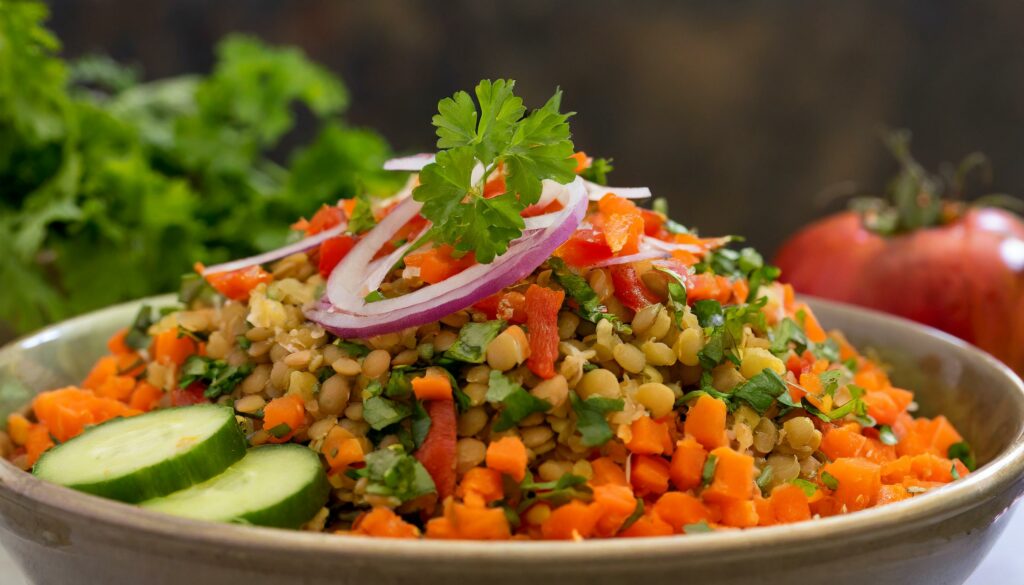
Salade de lentilles aux légumes croquants
Ingrédients :
- 200g de lentilles vertes cuites
- 1 carotte râpée
- 1 concombre coupé en dés
- 1 poivron rouge coupé en dés
- 1 oignon rouge finement émincé
- Une poignée de persil frais haché
- 2 cuillères à soupe d’huile d’olive
- Jus de 1 citron
- Sel et poivre au goût
Préparation :
- Dans un grand saladier, mélangez les lentilles cuites, les légumes râpés et coupés, et le persil haché.
- Dans un petit bol, préparez la vinaigrette en mélangeant l’huile d’olive, le jus de citron, le sel et le poivre.
- Versez la vinaigrette sur la salade et mélangez bien.
- Laissez reposer au réfrigérateur pendant au moins 30 minutes avant de servir pour que les saveurs se mélangent bien.
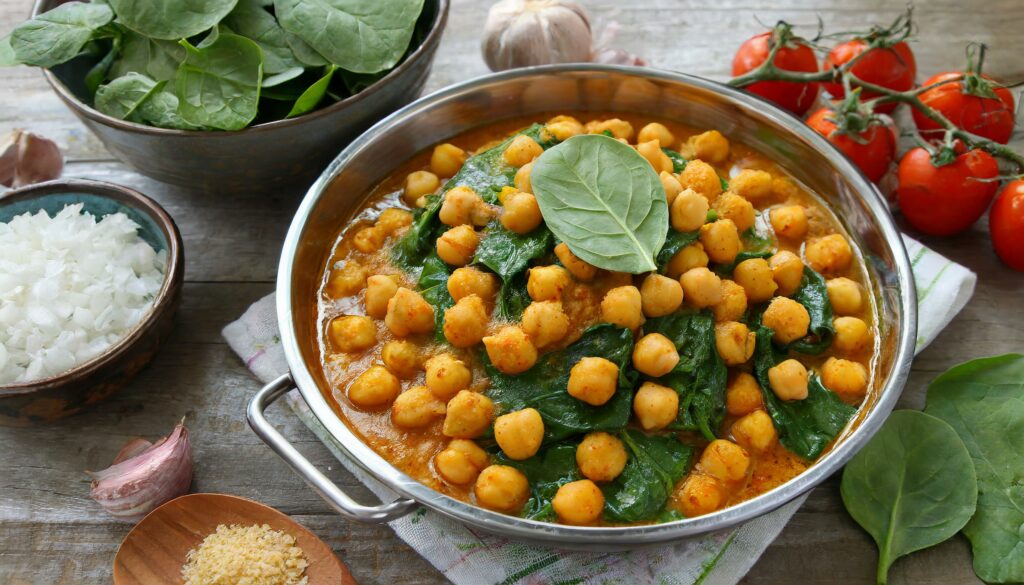
Curry de pois chiches aux épinards
Ingrédients :
- 400g de pois chiches cuits (ou une boîte de pois chiches, rincés et égouttés)
- 200g de jeunes pousses d’épinards
- 1 oignon émincé
- 2 gousses d’ail hachées
- 1 morceau de gingembre frais râpé (environ 1 cuillère à café)
- 1 boîte de tomates concassées (400g)
- 1 cuillère à soupe de pâte de curry
- 1 cuillère à soupe d’huile de coco
- Sel et poivre au goût
Préparation :
- Faites chauffer l’huile de coco dans une grande poêle à feu moyen. Ajoutez l’oignon, l’ail et le gingembre et faites revenir jusqu’à ce qu’ils soient tendres.
- Ajoutez la pâte de curry et faites cuire pendant 1-2 minutes pour libérer les arômes.
- Incorporez les pois chiches et les tomates concassées. Laissez mijoter pendant 10 minutes.
- Ajoutez les épinards et mélangez jusqu’à ce qu’ils soient flétris. Assaisonnez avec du sel et du poivre.
- Servez chaud avec du riz brun ou du quinoa.
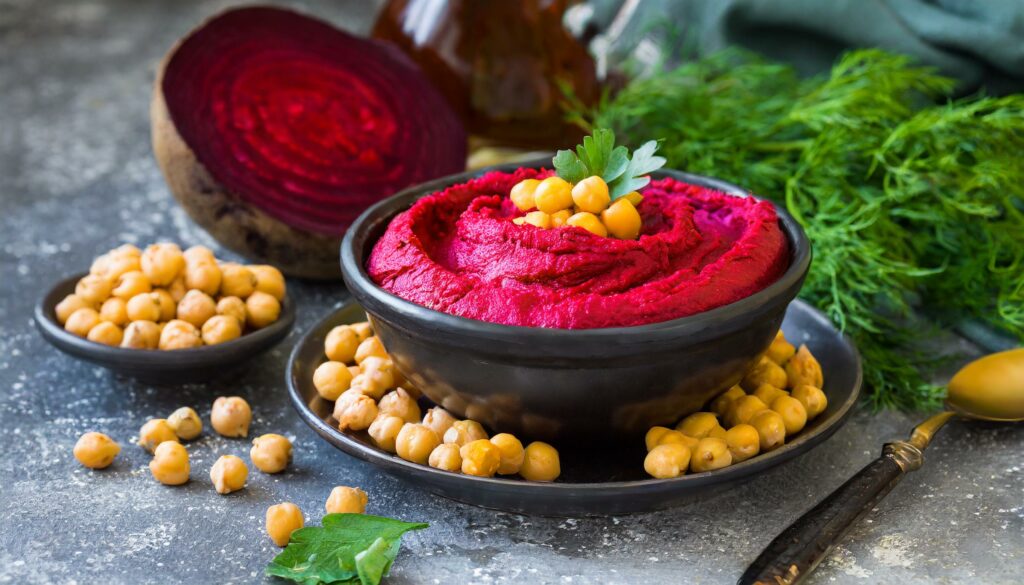
Houmous de betterave
Ingrédients :
- 400g de pois chiches cuits (ou une boîte de pois chiches, rincés et égouttés)
- 1 betterave cuite et pelée
- 2 cuillères à soupe de tahini
- Jus de 1 citron
- 2 gousses d’ail
- 2 cuillères à soupe d’huile d’olive
- Sel au goût
Préparation :
- Dans un mixeur, combinez les pois chiches, la betterave, le tahini, le jus de citron, l’ail et l’huile d’olive.
- Mixez jusqu’à obtenir une consistance lisse. Ajoutez un peu d’eau si le mélange est trop épais.
- Assaisonnez avec du sel selon votre goût.
- Servez le houmous avec des bâtonnets de légumes crus ou des tranches de pain pita.
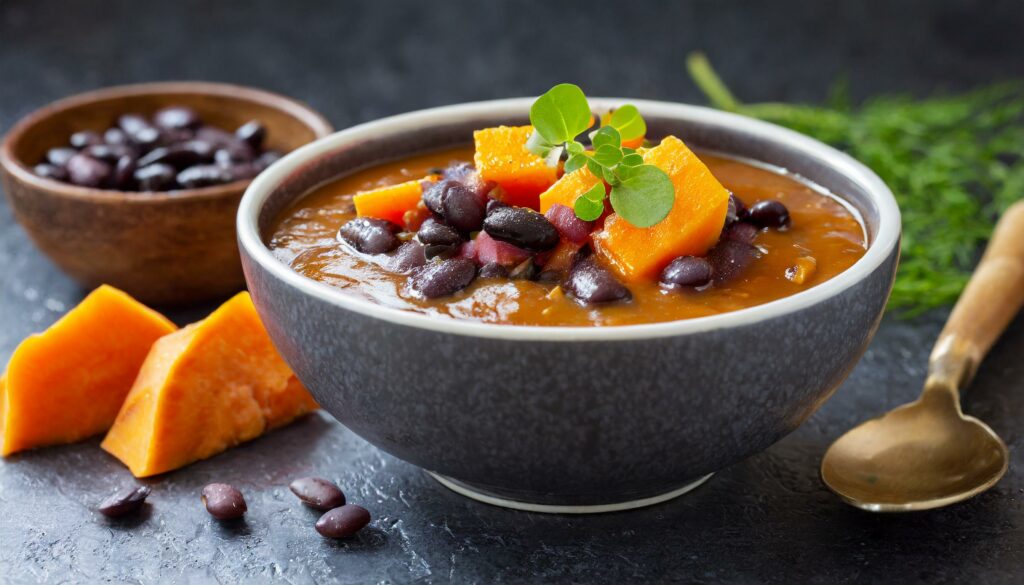
Soupe de haricots noirs et patate douce
Ingrédients :
- 400g de haricots noirs cuits (ou une boîte de haricots noirs, rincés et égouttés)
- 1 patate douce pelée et coupée en dés
- 1 oignon émincé
- 2 gousses d’ail hachées
- 1 litre de bouillon de légumes
- 1 cuillère à soupe de cumin en poudre
- 1 cuillère à soupe de paprika fumé
- Sel et poivre au goût
Préparation :
- Faites chauffer un peu d’huile d’olive dans une grande casserole à feu moyen. Ajoutez l’oignon et l’ail, et faites revenir jusqu’à ce qu’ils soient tendres.
- Ajoutez le cumin et le paprika, et faites cuire pendant 1-2 minutes.
- Incorporez la patate douce, les haricots noirs et le bouillon de légumes. Portez à ébullition, puis réduisez le feu et laissez mijoter pendant 20-25 minutes, jusqu’à ce que la patate douce soit tendre.
- Mixez une partie de la soupe pour obtenir une texture plus crémeuse tout en laissant des morceaux entiers pour la consistance.
- Assaisonnez avec du sel et du poivre et servez chaud.
Falafels au four
Ingrédients :
- 400g de pois chiches cuits (ou une boîte de pois chiches, rincés et égouttés)
- 1 oignon rouge coupé en gros morceaux
- 2 gousses d’ail
- Une poignée de persil frais
- 1 cuillère à café de cumin en poudre
- 1 cuillère à café de coriandre en poudre
- 2 cuillères à soupe de farine (de pois chiches ou de blé)
- Sel et poivre au goût
Préparation :
- Préchauffez votre four à 200°C (400°F) et recouvrez une plaque de cuisson de papier sulfurisé.
- Dans un mixeur, combinez les pois chiches, l’oignon, l’ail, le persil, le cumin et la coriandre. Mixez jusqu’à obtenir une consistance homogène mais encore légèrement granuleuse.
- Transférez le mélange dans un bol et incorporez la farine. Assaisonnez avec du sel et du poivre.
- Formez des petites boulettes ou des galettes avec le mélange et placez-les sur la plaque de cuisson.
- Faites cuire au four pendant 20-25 minutes, en retournant à mi-cuisson, jusqu’à ce qu’elles soient dorées et croustillantes à l’extérieur.
- Servez les falafels avec une sauce au yaourt et concombre ou dans un wrap avec des légumes frais.

Ces cinq recettes vous montrent à quel point il est facile et délicieux d’incorporer des légumineuses dans votre alimentation quotidienne.
Non seulement elles sont nutritives et rassasiantes, mais elles peuvent également vous aider à gérer votre poids de manière efficace.
N’hésitez pas à expérimenter et à personnaliser ces recettes selon vos goûts et vos besoins alimentaires.
Bon appétit !