Vous avez souvent des ballonnements, des douleurs abdominales ou d’autres inconforts digestifs ?
Ces symptômes peuvent être liés à la fermentation des aliments dans l’intestin.
Pour ceux qui cherchent à éviter ces désagréments, voici une liste d’aliments qui ne fermentent pas dans l’intestin.
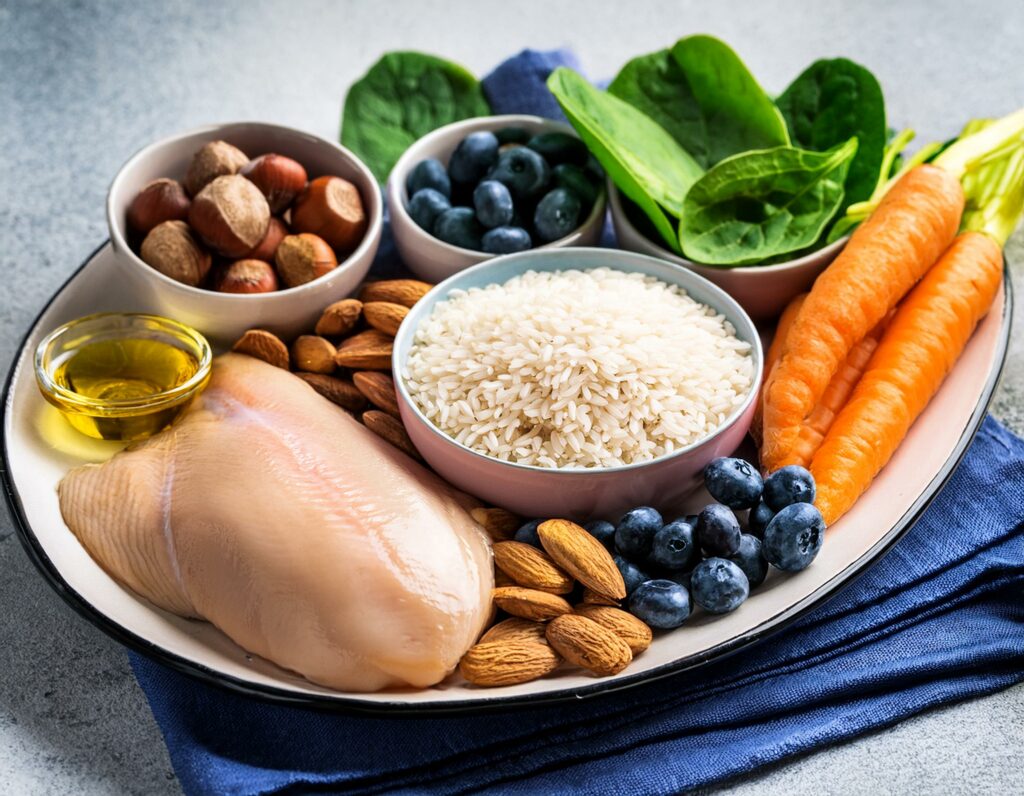
Ces aliments sont souvent mieux tolérés et peuvent contribuer à une digestion plus confortable :
- Poulet
- Poisson
- Œufs
- Riz blanc
- Pommes de terre
- Carottes
- Courgettes
- Haricots verts
- Laitue
- Épinards
- Amandes
- Noix de macadamia
- Huile d’olive
- Banane mûre
- Myrtilles
Ces aliments sont moins susceptibles de provoquer des fermentations intestinales, ce qui peut grandement améliorer votre confort digestif au quotidien.
Poulet
Le poulet est une excellente source de protéines maigres qui est facile à digérer
Il ne contient pas de fibres fermentescibles, ce qui en fait un choix sûr pour ceux qui cherchent à éviter la fermentation intestinale.
Le poulet peut être intégré dans une variété de plats, des salades aux soupes, en passant par les plats principaux.
Conseil pratique : Optez pour des préparations simples comme le poulet grillé ou rôti, sans sauces lourdes ou épicées. Pour plus de saveur, marinez-le avec des herbes et du jus de citron avant la cuisson.
Poisson
Le poisson, en particulier les variétés maigres comme le cabillaud ou le tilapia, est également facile à digérer.
Il est riche en oméga-3, bénéfiques pour la santé globale, notamment pour la réduction de l’inflammation et l’amélioration de la santé cardiaque.
Pour en savoir plus sur les oméga-3 et leurs effets, consultez notre article sur les oméga-3 en gélules et les mythes sur leurs dangers.
Conseil pratique : Préparez le poisson au four avec un filet d’huile d’olive et des herbes pour une digestion optimale. Variez les plaisirs en essayant des recettes de poisson en papillote ou en ajoutant du poisson à vos salades.
Œufs
Les œufs sont une autre excellente source de protéines non fermentescibles.
Ils sont polyvalents et peuvent être cuisinés de multiples façons.
Les œufs contiennent également des nutriments essentiels comme la vitamine B12 et le sélénium.
Pour en savoir plus sur les bienfaits des œufs, consultez notre article sur les œufs et leur impact sur le foie.
Conseil pratique : Consommez-les pochés, brouillés ou à la coque pour une digestion facile. Essayez également des omelettes aux légumes ou des quiches pour varier les repas.
Riz blanc
Le riz blanc est un glucide simple qui est très facile à digérer.
Contrairement au riz brun, il ne contient pas de fibres qui peuvent fermenter dans l’intestin.
Il est également une source d’énergie rapide et peut être un accompagnement polyvalent.
Conseil pratique : Associez le riz blanc à des légumes cuits et des protéines maigres pour un repas équilibré et léger. Expérimentez avec des plats comme le riz pilaf ou le riz frit avec des légumes.
Pommes de terre
Les pommes de terre, particulièrement lorsqu’elles sont pelées et cuites, sont une bonne source de glucides non fermentescibles.
Elles fournissent également du potassium, important pour la santé cardiovasculaire.
Conseil pratique : Préférez les pommes de terre cuites à l’eau, au four ou en purée sans ajout excessif de matières grasses. Ajoutez des herbes fraîches et un peu d’huile d’olive pour plus de saveur.
Carottes
Les carottes cuites sont douces pour l’intestin et ne fermentent pas.
Elles apportent également des vitamines et des antioxydants qui sont bénéfiques pour la santé globale, notamment la santé des yeux.
Pour en savoir plus sur les effets des carottes sur la digestion, lisez notre article sur les carottes et la constipation.
Conseil pratique : Intégrez-les dans des soupes, des purées ou des plats mijotés pour une meilleure digestion. Les carottes râpées peuvent également être ajoutées aux salades pour une texture croquante.
Courgettes
Les courgettes sont légères et faciles à digérer.
Elles peuvent être consommées crues ou cuites sans risque de fermentation.
Elles sont également riches en vitamine C et en fibres douces.
Conseil pratique : Essayez-les en salade, grillées ou dans des ratatouilles. Les courgettes peuvent également être utilisées dans des plats de pâtes ou comme base de pizzas végétariennes.
Haricots verts
Les haricots verts cuits sont une autre option de légume non fermentescible.
Ils sont riches en fibres solubles qui sont plus douces pour l’intestin et apportent une bonne quantité de vitamines A, C et K.
Conseil pratique : Ajoutez-les à des plats sautés ou à la vapeur pour un repas léger. Les haricots verts peuvent également être incorporés dans des salades ou des plats de riz.
Laitue
La laitue est très digeste et ne provoque pas de fermentation.
Elle est idéale pour les salades et apporte une texture croquante et rafraîchissante.
Conseil pratique : Combinez-la avec des légumes cuits et des protéines pour une salade nourrissante. Variez les types de laitue pour différentes textures et saveurs dans vos salades.
Épinards
Les épinards cuits sont une excellente source de fer et d’autres nutriments sans risque de fermentation. Ils sont également riches en antioxydants qui soutiennent la santé globale.
Conseil pratique : Utilisez-les dans des omelettes, des quiches ou comme accompagnement. Les épinards peuvent également être ajoutés aux smoothies pour un boost nutritionnel.
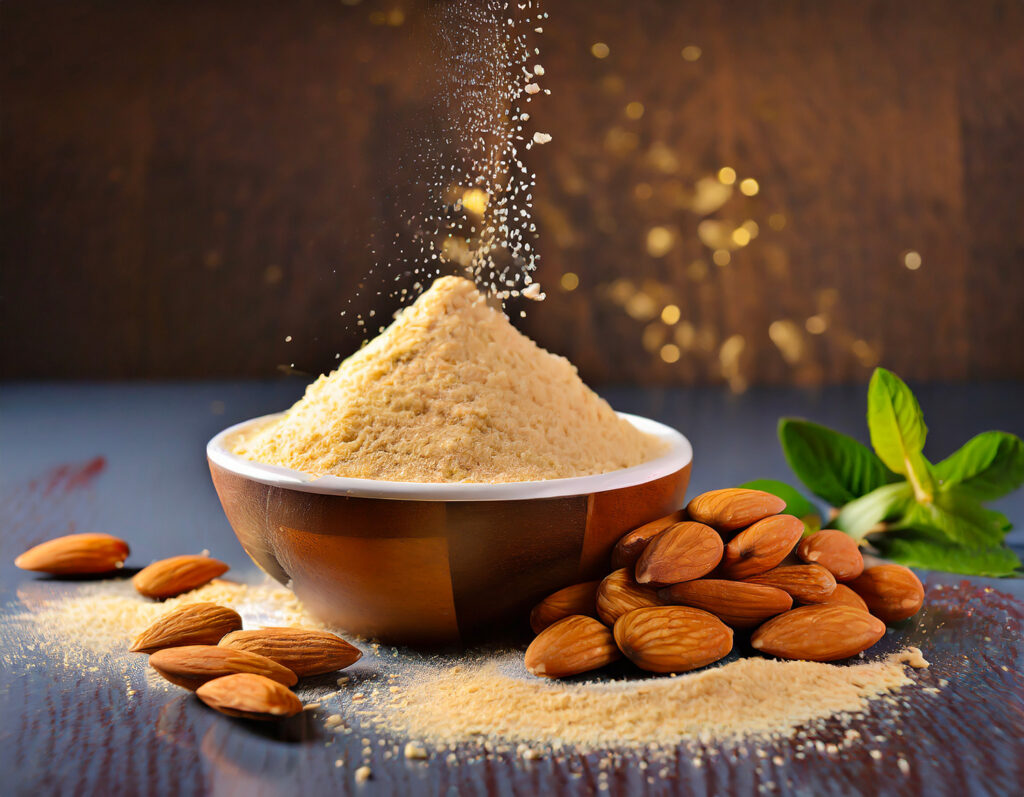
Amandes
Les amandes, lorsqu’elles sont consommées en petites quantités, ne fermentent pas et fournissent des graisses saines, des protéines et des fibres.
Elles sont également riches en vitamine E et magnésium.
Conseil pratique : Consommez une poignée d’amandes comme collation ou ajoutez-les à vos plats. Elles peuvent être utilisées dans les desserts ou les salades pour une touche croquante.
Pour apprendre comment utiliser les amandes dans votre cuisine, consultez notre guide sur comment faire de la poudre d’amandes.
Noix de macadamia
Les noix de macadamia sont également faciles à digérer et riches en graisses monoinsaturées, bénéfiques pour la santé cardiaque.
Elles sont aussi une bonne source de thiamine et de manganèse.
Conseil pratique : Ajoutez-les à vos salades ou consommez-les en collation. Elles peuvent également être utilisées dans des pâtisseries pour une texture riche et beurrée.
Huile d’olive
L’huile d’olive est bien tolérée par l’intestin et ne provoque pas de fermentation.
Elle est également bénéfique pour la santé cardiovasculaire grâce à ses graisses monoinsaturées.
Conseil pratique : Utilisez-la comme base pour vos vinaigrettes ou pour cuisiner. L’huile d’olive peut être ajoutée aux légumes rôtis ou utilisée pour préparer des marinades.
Banane mûre
Les bananes mûres sont douces pour l’estomac et ne fermentent pas.
Elles sont également une bonne source de potassium, important pour la fonction musculaire et la santé cardiaque.
Conseil pratique : Ajoutez-les à vos smoothies, yaourts ou consommez-les seules. Les bananes peuvent également être utilisées dans des recettes de pain ou de muffins pour une douceur naturelle.
Myrtilles
Les myrtilles sont riches en antioxydants et ne fermentent pas dans l’intestin.
Elles sont idéales pour les collations ou les desserts et apportent des vitamines C et K.
Conseil pratique : Intégrez-les dans vos céréales, yaourts ou consommez-les nature. Les myrtilles peuvent également être utilisées dans des smoothies ou des pâtisseries pour une saveur sucrée et acidulée.
Qu’est-ce que la fermentation intestinale ?
La fermentation intestinale est un processus naturel qui se produit dans le côlon, où les bactéries intestinales décomposent les aliments non digérés.
Bien que ce soit une partie normale de la digestion, une fermentation excessive peut entraîner des problèmes digestifs.
Mécanismes de la fermentation intestinale
- Bactéries intestinales : Le côlon abrite des milliards de bactéries bénéfiques qui aident à décomposer les fibres alimentaires et les hydrates de carbone complexes que l’intestin grêle n’a pas pu digérer.
- Production de gaz : Ce processus de décomposition produit divers gaz, principalement le dioxyde de carbone, l’hydrogène et, dans certains cas, le méthane.
- Acides gras à chaîne courte : La fermentation produit également des acides gras à chaîne courte (AGCC) comme le butyrate, le propionate et l’acétate, qui sont bénéfiques pour la santé intestinale et métabolique.
Causes courantes de la fermentation excessive
- Alimentation riche en fibres fermentescibles : Les aliments riches en fibres solubles, comme les légumineuses, certains fruits et légumes, peuvent entraîner une fermentation excessive.
- Intolérances alimentaires : Les personnes intolérantes au lactose ou au gluten peuvent éprouver une fermentation excessive lorsqu’elles consomment ces aliments. Pour découvrir des alternatives, consultez notre liste de 10 aliments sans gluten et sans lactose.
- Dysbiose intestinale : Un déséquilibre dans la flore intestinale, souvent causé par une mauvaise alimentation, des antibiotiques ou le stress, peut augmenter la fermentation.
Les symptômes de la fermentation intestinale
La fermentation intestinale peut provoquer divers symptômes désagréables, dont l’intensité peut varier d’une personne à l’autre.
Principaux symptômes
- Ballonnements : Une sensation de gonflement et de tension dans l’abdomen, souvent accompagnée d’une distension visible.
- Gaz : Production excessive de gaz, entraînant des flatulences fréquentes et parfois bruyantes.
- Douleurs abdominales : Crampes et douleurs dans la région abdominale, souvent dues à l’accumulation de gaz.
- Rots : Production accrue de gaz dans l’estomac, entraînant des éructations fréquentes.
- Changements de selles : La fermentation peut causer des diarrhées ou, à l’inverse, une constipation.
Symptômes additionnels
- Fatigue : L’inconfort digestif et les troubles intestinaux peuvent entraîner une fatigue générale.
- Maux de tête : Les gaz et les ballonnements peuvent provoquer des maux de tête et une sensation de malaise général.
- Nausées : Une fermentation excessive peut parfois causer des nausées, surtout après les repas.
Les erreurs courantes à éviter
Pour gérer efficacement la fermentation intestinale, il est important de connaître et d’éviter certaines erreurs courantes qui peuvent exacerber les symptômes.
Consommation excessive d’aliments fermentescibles
- Légumineuses : Comme mentionné précédemment.
- Certains fruits et légumes : Les pommes, les poires, le chou et les oignons sont également connus pour causer une fermentation excessive chez certaines personnes.
Mauvaises combinaisons alimentaires
- Mélanges de glucides et de protéines : Combiner des aliments riches en glucides avec des protéines peut ralentir la digestion et augmenter la fermentation.
- Aliments gras et sucrés : Les aliments riches en graisses et en sucres peuvent fermenter plus facilement et provoquer des symptômes.
Consommation de boissons gazeuses et sucrées
- Sodas et boissons gazeuses : Les boissons gazeuses introduisent du dioxyde de carbone dans le système digestif, augmentant ainsi les gaz et les ballonnements. Pour en savoir plus sur les alternatives aux boissons gazeuses et plus précisément sur l’eau gazeuse, consultez notre article sur l’eau pétillante la moins salée.
- Jus de fruits riches en fructose : Les jus de fruits comme le jus de pomme ou de poire contiennent des sucres qui peuvent fermenter rapidement dans l’intestin.
Mauvaises habitudes alimentaires
- Manger trop rapidement : Avaler de l’air en mangeant trop vite peut augmenter les gaz intestinaux et les ballonnements.
- Portions trop grandes : Consommer de grandes quantités de nourriture à la fois peut surcharger le système digestif et provoquer une fermentation excessive.
Ignorer les intolérances alimentaires
- Lactose : Les personnes intolérantes au lactose doivent éviter les produits laitiers pour prévenir la fermentation et les symptômes associés.
- Gluten : Les personnes atteintes de la maladie cœliaque ou sensibles au gluten doivent éliminer le gluten de leur alimentation pour éviter les troubles digestifs.
En comprenant ces mécanismes et en évitant ces erreurs courantes, vous pouvez mieux gérer la fermentation intestinale et améliorer votre confort digestif.
Conclusion
La fermentation intestinale peut causer des inconforts, mais en choisissant des aliments qui ne fermentent pas, comme le poulet, le poisson, les œufs, le riz blanc et certains légumes, vous pouvez améliorer votre digestion.
Évitez les erreurs courantes comme la consommation excessive d’aliments fermentescibles et les mauvaises combinaisons alimentaires.
Adoptez des habitudes alimentaires saines : mangez lentement, mastiquez bien et hydratez-vous correctement.
Pour des conseils personnalisés, consultez un professionnel de la santé.
En prenant soin de votre alimentation, vous pouvez profiter d’une digestion sereine et d’un meilleur bien-être général.