Plongeons ensemble dans l’univers fascinant des protéines, ces héros méconnus de notre quotidien !
Imaginez une usine où chaque machine est une protéine : elles construisent, réparent, et maintiennent l’ensemble du système, c’est-à-dire notre corps.
Essentielles à la vie, les protéines sont partout : dans nos muscles, notre peau, nos cheveux, et même au cœur de processus vitaux comme la digestion ou le transport de l’oxygène dans le sang.
Elles sont de véritables polymères, constituées d’enchaînements d’acides aminés, et chaque protéine est unique en son genre !
Types de protéines et leurs sources
Laissez-nous vous emmener dans un voyage gastronomique à la découverte des protéines, ces bâtisseurs silencieux et essentiels de notre corps.
Comme les pièces d’un vaste puzzle biologique, il existe deux types principaux de protéines : animales et végétales, chacune avec ses propres caractéristiques uniques et bénéfiques.
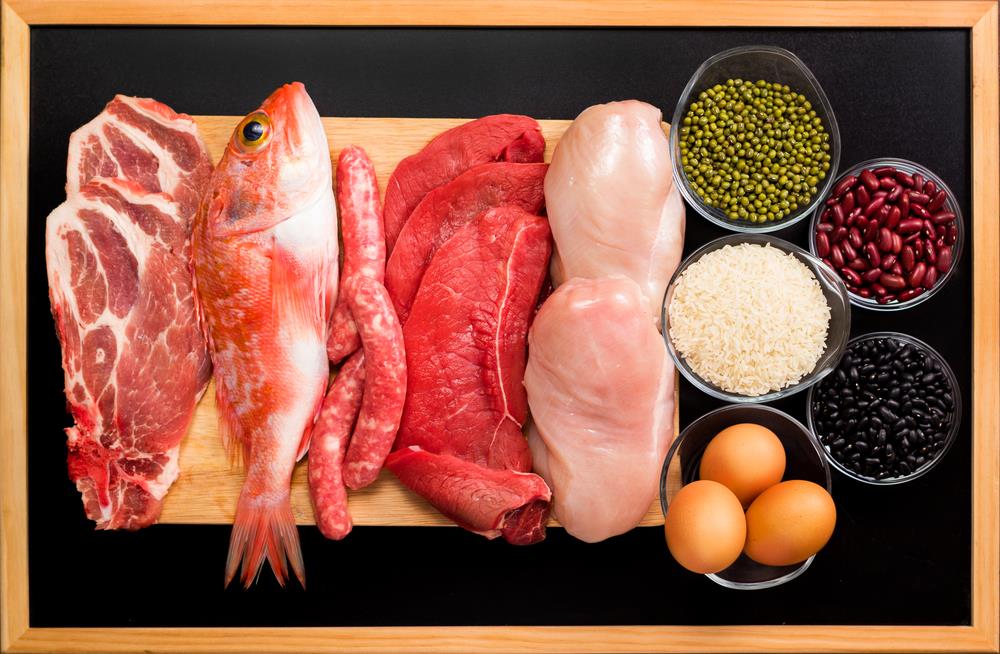
Protéines animales : les bâtisseurs robustes
Les protéines animales, considérées comme des « protéines complètes », contiennent tous les acides aminés essentiels nécessaires au corps humain. Imaginez-les comme les bâtisseurs robustes de notre organisme. Elles se trouvent dans :
- La viande : un classique riche en protéines, de votre steak juteux à votre poulet rôti.
- Les produits laitiers : pensez au yaourt, au fromage et au lait, des aliments polyvalents et savoureux.
- Les œufs : petits mais puissants, ils sont une source complète de protéines.
- Les poissons : non seulement riches en protéines mais aussi en oméga-3, bons pour le cœur.
Protéines végétales : les artisans subtils
Les protéines végétales, bien qu’elles ne contiennent pas toujours tous les acides aminés essentiels, peuvent être combinées pour former un profil complet. Pensez à elles comme à des artisans subtils qui, ensemble, créent une œuvre complète. Elles sont présentes dans :
- Les légumineuses : haricots, lentilles, pois… riches en fibres et protéines.
- Les céréales : quinoa, riz brun, et avoine, des bases polyvalentes pour de nombreux plats.
- Les noix et graines : amandes, graines de chia, et noix de cajou, des snacks nutritifs et énergétiques.
- Le soja et ses dérivés : tofu, tempeh, un monde de possibilités pour les plats végétariens et végétaliens.
Besoins en protéines : comment les déterminer ?
La quête pour déterminer nos besoins en protéines peut s’apparenter à une exploration personnelle, car ces besoins varient grandement d’une personne à l’autre.
Ils dépendent de plusieurs facteurs, tels que l’âge, le sexe, le niveau d’activité physique, et même l’état de santé général. Comprendre ces besoins est essentiel pour optimiser notre santé et notre bien-être.
L’importance des protéines
Les protéines ne sont pas seulement les briques fondamentales des muscles, elles jouent également un rôle clé dans presque toutes les fonctions biologiques de notre corps.
Elles contribuent à la réparation cellulaire, au fonctionnement du système immunitaire, et même à la sensation de satiété après un repas.
Facteurs influençant les besoins en protéines
- Âge : Les jeunes en pleine croissance, les personnes âgées, et les femmes enceintes ou allaitantes ont des besoins accrus.
- Activité physique : Les athlètes ou ceux qui pratiquent une activité physique intense peuvent nécessiter plus de protéines pour la réparation et la croissance musculaire.
- État de santé : Certaines conditions de santé peuvent augmenter ou diminuer les besoins en protéines.
Comment calculer vos besoins ?
Une méthode courante consiste à utiliser un calcul basé sur le poids corporel.
Pour un adulte moyen, l’apport recommandé est d’environ 0.8 grammes de protéines par kilogramme de poids corporel par jour.
Cela signifie qu’une personne pesant 70 kg devrait viser à consommer environ 56 grammes de protéines par jour. Ce chiffre est une estimation et peut varier en fonction des facteurs mentionnés ci-dessus.
Cependant, si vous êtes un sportif ou une personne très active, vos besoins en protéines peuvent augmenter significativement.
Les athlètes, en particulier ceux qui se concentrent sur la musculation ou les sports d’endurance, pourraient avoir besoin de 1.2 à 2.0 grammes de protéines par kilogramme de poids corporel par jour.
Cette augmentation permet de soutenir la réparation musculaire, la croissance musculaire et la récupération après l’exercice.
Pour en savoir plus, consultez cet article sur la nutrition idéale pour un sportif.
Mythes et réalités sur les protéines
Le monde des protéines est souvent entouré de mythes et de malentendus.
Dans cette section, nous allons séparer le vrai du faux et explorer quelques-uns des mythes les plus répandus sur les protéines, en les confrontant avec la réalité scientifique.
Mythe 3 : Plus de protéines égale plus de muscles
Un des mythes les plus courants est que consommer des quantités excessives de protéines mène automatiquement à une augmentation de la masse musculaire.
En réalité, alors que les protéines sont essentielles à la croissance musculaire, un excès de protéines au-delà des besoins du corps peut simplement être transformé en énergie ou stocké sous forme de graisse.
Un apport équilibré en protéines, combiné à un entraînement physique régulier, est la clé pour construire et maintenir la masse musculaire.
Mythe 2 : Les protéines végétales sont inférieures aux protéines animales
Beaucoup pensent que les protéines végétales sont incomplètes et inférieures aux protéines animales en termes de qualité.
Cependant, les protéines végétales peuvent fournir tous les acides aminés essentiels lorsque différentes sources végétales sont combinées (comme le riz et les haricots).
De plus, les protéines végétales apportent des avantages supplémentaires comme des fibres et des phytonutriments absents dans les sources animales.
Mythe 3 : Un régime riche en protéines est bon pour tout le monde
Bien que les protéines soient un élément essentiel de tout régime alimentaire, les besoins varient grandement d’une personne à l’autre.
Un régime excessivement riche en protéines n’est pas nécessairement bénéfique pour tout le monde et peut, dans certains cas, exercer une pression supplémentaire sur les reins et d’autres organes.
Il est important de trouver un équilibre adapté à ses besoins personnels, son mode de vie et son état de santé.
Généralement, les régimes restrictifs ne sont pas essentiels car ils peuvent mener à des craquages. Des approches plus simples comme manger plus pour perdre du poids peuvent être plus efficaces.
Protéines et santé : impacts et recommandations
Les protéines jouent un rôle essentiel dans le maintien de la santé et du bien-être.
Elles ne sont pas seulement les briques fondamentales de nos muscles, mais elles influencent aussi de nombreux autres aspects de notre santé.
Dans cette section, nous explorerons les divers impacts des protéines sur la santé et donnerons des recommandations pour une consommation optimale.
Impacts des protéines sur la santé
Les protéines ont de multiples effets bénéfiques sur notre corps :
- Maintien de la masse musculaire : Essentielles pour la croissance et la réparation des muscles, surtout après l’exercice.
- Santé osseuse : Jouent un rôle dans le maintien de la force et de la densité osseuse.
- Métabolisme et perte de poids : Peuvent augmenter la satiété et stimuler le métabolisme, aidant ainsi à la gestion du poids.
- Fonctionnement du système immunitaire : Cruciales pour la construction de composants immunitaires comme les anticorps.
Recommandations pour une consommation équilibrée
Bien que les protéines soient indispensables, leur consommation doit être équilibrée et adaptée aux besoins individuels :
- Diversité des sources : Inclure un mélange de sources animales et végétales pour un apport équilibré en acides aminés.
- Éviter les excès : Une consommation excessive de protéines, surtout d’origine animale, peut être liée à des problèmes de santé comme une charge accrue sur les reins.
- Considérer les besoins personnels : Les besoins varient selon l’âge, le sexe, le niveau d’activité physique, et l’état de santé général.
Évaluation critique des compléments protéinés sur le marché
Avec un marché inondé de compléments protéinés, il est crucial de savoir comment naviguer parmi les innombrables options pour trouver les produits qui répondent vraiment à vos besoins.
Cette section offre une évaluation critique des compléments protéinés disponibles sur le marché, en se concentrant sur leur qualité, efficacité et valeur nutritionnelle.
Comprendre la composition des compléments protéinés
Les compléments protéinés varient grandement en termes de source de protéines (comme le lactosérum, le soja, le pois, etc.), la qualité des ingrédients, et la présence d’additifs ou de fillers.
Certains produits peuvent contenir des quantités excessives de sucre, de graisses, ou d’additifs inutiles.
Il est essentiel de lire attentivement les étiquettes pour comprendre la composition du produit.
Évaluer la qualité et la biodisponibilité
La qualité d’une protéine est déterminée par sa capacité à fournir tous les acides aminés essentiels.
La biodisponibilité, c’est-à-dire la capacité du corps à utiliser ces protéines, est également un facteur crucial.
Les compléments de haute qualité offrent une bonne balance d’acides aminés essentiels et sont facilement absorbés par le corps.
Comparer les marques et les revendications
Face aux allégations marketing, il est important d’examiner les preuves scientifiques soutenant ces revendications.
La recherche de critiques et d’évaluations de tiers peut fournir des informations précieuses sur l’efficacité et la sécurité des produits.
Conseils pour choisir un complément adapté
- Identifier vos besoins spécifiques : Sportifs, végétariens, personnes avec des restrictions alimentaires, ou ceux cherchant une aide à la gestion du poids peuvent avoir des besoins différents.
- Privilégier la transparence et la simplicité : Les produits avec moins d’ingrédients et une étiquette claire sont souvent préférables.
- Considérer le goût et la solubilité : Un produit agréable au goût et facile à mélanger peut encourager une utilisation régulière.
Conclusion
Alors que nous concluons notre exploration du monde fascinant des protéines, rappelons-nous leur rôle crucial non seulement dans notre alimentation mais aussi dans notre vie quotidienne.
Les protéines sont plus qu’un simple nutriment, elles sont une composante essentielle de notre santé, influençant tout, de la force musculaire à la fonction immunitaire.
Nous avons démystifié les mythes courants, examiné les divers types et sources de protéines, et souligné l’importance de comprendre nos besoins individuels.
L’évaluation des compléments protéinés a révélé qu’une approche éclairée et critique est nécessaire lors du choix de ces produits.
Le message à retenir
- Équilibre et diversité : Une alimentation riche en protéines doit être équilibrée et diversifiée, combinant idéalement des sources animales et végétales.
- Écouter son corps : Les besoins en protéines varient d’une personne à l’autre; il est important d’écouter son corps et d’ajuster son apport en conséquence.
- Qualité sur quantité : La qualité des protéines consommées est aussi importante que la quantité. Choisissez des sources de protéines qui soutiennent votre santé globale.
Enfin, souvenez-vous que les protéines, bien qu’essentielles, ne sont qu’une partie d’une alimentation et d’un mode de vie sains.
Une approche équilibrée de la nutrition, qui inclut tous les groupes alimentaires et un mode de vie actif, est la clé d’une santé optimale.
Si cet article a éveillé votre curiosité et votre intérêt pour la nutrition, nous avons une bonne nouvelle pour vous : l’apprentissage ne s’arrête pas ici.
Découvrez nos autres articles dédiés aux glucides et aux lipides pour compléter votre compréhension de ces macronutriments essentiels.
Tout comme les protéines, les glucides et les lipides jouent des rôles uniques et vitaux dans notre alimentation et notre santé.
En approfondissant votre connaissance de ces nutriments, vous serez mieux équipé pour faire des choix alimentaires éclairés et bénéfiques pour votre santé.