Réchauffer une pizza peut sembler simple, mais obtenir une pizza aussi délicieuse que lorsqu’elle est fraîchement cuite nécessite de connaître le temps de réchauffage optimal.
Alors, combien de temps faut-il réchauffer une pizza au four ?
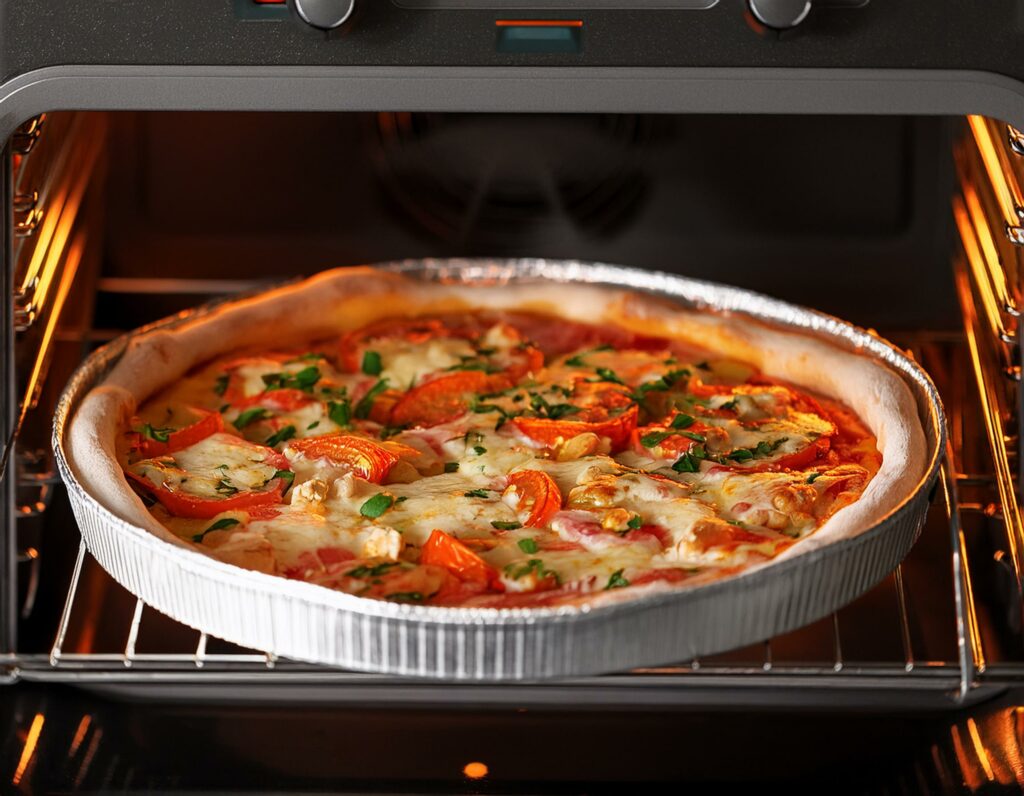
En général, il est recommandé de réchauffer une pizza au four à une température de 180°C (350°F) pendant 10 à 15 minutes.
Ce temps permet de chauffer la pizza uniformément sans la dessécher ni la brûler.
Bien sûr, la durée exacte peut varier en fonction de l’épaisseur de la croûte et de la quantité de garnitures.
Dans cet article, nous vous fournirons un guide pratique et des astuces pour réchauffer votre pizza de manière optimale.
Nous aborderons les avantages de cette méthode, comment éviter que la pizza ne durcisse, et explorerons d’autres méthodes de réchauffage.
Suivez nos conseils pour savourer une pizza réchauffée aussi délicieuse que lorsqu’elle est sortie du four pour la première fois.
- Les avantages à faire réchauffer une pizza au four pendant 10 à 15 minutes
- Comment réchauffer une pizza cuite au four ?
- Est-ce qu’on peut mettre du carton dans le four ?
- Quelles sont les autres méthodes pour réchauffer une pizza sans utiliser le four ?
- Comment stocker une pizza afin de maintenir ses valeurs nutritionnelles lorsqu’elle est réchauffée ?
Les avantages à faire réchauffer une pizza au four pendant 10 à 15 minutes
Réchauffer une pizza au four est une méthode privilégiée par de nombreux amateurs de pizza.
Voici les principaux avantages de réchauffer une pizza au four pendant 10 à 15 minutes :
Texture optimale
Lorsque vous réchauffez une pizza au four pendant 10 à 15 minutes, vous obtenez une croûte qui reste croustillante à l’extérieur et moelleuse à l’intérieur.
Cette méthode permet de retrouver la texture originale de la pizza, comparable à celle d’une pizza fraîchement cuite.
Préservation des saveurs
Réchauffer une pizza au four permet de préserver les saveurs originales des ingrédients.
La chaleur douce et constante du four aide à maintenir l’équilibre des goûts, qu’il s’agisse de la sauce tomate, du fromage fondant ou des différentes garnitures. Les arômes se ravivent sans être altérés.
Pas de dessèchement
Contrairement à d’autres méthodes de réchauffage, comme le micro-ondes, le four n’assèche pas la pizza.
En suivant la durée de réchauffage recommandée de 10 à 15 minutes, vous évitez que la pizza ne devienne sèche et dure. La pizza reste savoureuse et agréable à manger.
Flexibilité
Le temps de 10 à 15 minutes permet d’ajuster facilement la cuisson selon vos préférences et le type de pizza.
Par exemple, une pizza avec une croûte plus épaisse peut nécessiter la totalité des 15 minutes, tandis qu’une pizza fine peut être prête en 10 minutes.
Cette flexibilité permet de s’adapter à toutes les variétés de pizza.
Préservation des nutriments
Le réchauffage au four à une température modérée permet de conserver davantage les vitamines (ex : Vitamine B12) et minéraux (ex : magnésium) des ingrédients de la pizza.
Contrairement à d’autres méthodes comme le micro-ondes, la chaleur douce et uniforme du four altère moins les qualités nutritionnelles des aliments.
Réduction des composés nocifs
En évitant de surchauffer ou de brûler la pizza, le réchauffage au four réduit le risque de formation de substances potentiellement nocives, telles que les composés acrylamides qui peuvent se former à haute température.
Cela rend la pizza réchauffée au four plus saine à consommer.
Moins de gras et d’huile
Réchauffer une pizza au four ne nécessite pas l’ajout de graisses ou d’huiles supplémentaires, donc moins de lipides, contrairement à certaines méthodes de réchauffage à la poêle.
Cela permet de garder le contenu calorique de la pizza sous contrôle et d’éviter l’ajout de graisses saturées.
Meilleure digestion
La cuisson uniforme et douce du four permet une meilleure digestion des aliments.
Les pizzas réchauffées rapidement au micro-ondes peuvent parfois rester froides à l’intérieur, ce qui peut perturber la digestion. Le four, en revanche, chauffe la pizza de manière homogène, facilitant ainsi une digestion optimale.
Tout comme les carottes, qui ne constipent pas et favorisent une bonne digestion, une pizza réchauffée correctement au four peut être plus facile à digérer.
En conclusion, réchauffer une pizza au four pendant 10 à 15 minutes n’offre pas seulement des avantages en termes de texture, de goût et de simplicité, mais contribue également à préserver les qualités nutritionnelles et à assurer une consommation plus saine.
Pour une pizza réchauffée aussi savoureuse que bénéfique pour la santé, le four est sans conteste la meilleure méthode.
Comment réchauffer une pizza cuite au four ?
Réchauffer une pizza au four est une méthode efficace pour retrouver la saveur et la texture d’une pizza fraîchement cuite.
Voici un guide étape par étape pour réchauffer votre pizza de manière optimale :
1. Préchauffez votre four
Préchauffez votre four à 180°C (350°F). Préchauffer le four est essentiel pour assurer une chaleur uniforme dès le début du processus de réchauffage.
Cela permet de garantir que la pizza chauffe de manière homogène, évitant ainsi les parties froides ou brûlées.
Pour des conseils supplémentaires sur l’utilisation de fours à pizza, vous pouvez consulter les ressources de Branner, experts en fours à bois.
2. Préparez la pizza
Si votre pizza a été conservée au réfrigérateur, sortez-la et laissez-la reposer à température ambiante pendant environ 10 minutes.
Cela aide à réduire le choc thermique et à chauffer plus uniformément. Pendant ce temps, vous pouvez enlever tout papier aluminium ou plastique utilisé pour la conservation.
3. Utilisez une grille ou une plaque à pâtisserie
Pour un résultat optimal, placez la pizza directement sur une grille du four. Cela permet à l’air chaud de circuler autour de la pizza, assurant une croûte croustillante.
Si vous préférez utiliser une plaque à pâtisserie, assurez-vous qu’elle soit préchauffée en même temps que le four pour éviter que la base de la pizza ne devienne molle.
4. Ajoutez un peu d’humidité
Pour éviter que la pizza ne se dessèche, vous pouvez vaporiser légèrement les bords avec de l’eau ou placer un petit bol d’eau dans le four.
La vapeur générée aidera à maintenir l’humidité de la pizza, gardant ainsi la croûte moelleuse à l’intérieur tout en étant croustillante à l’extérieur.
5. Réchauffez la pizza
Placez la pizza dans le four préchauffé et laissez-la chauffer pendant 10 à 15 minutes. La durée exacte dépendra de l’épaisseur de la croûte et de la quantité de garnitures.
Surveillez la pizza pour éviter qu’elle ne brûle.
Vous pouvez également vérifier la température en insérant délicatement un thermomètre au centre de la pizza, elle devrait atteindre environ 75°C (165°F).
6. Vérifiez la pizza régulièrement
Pendant le processus de réchauffage, vérifiez régulièrement la pizza pour vous assurer qu’elle ne brûle pas.
Si les bords commencent à trop brunir avant que le centre ne soit bien chaud, vous pouvez couvrir légèrement les bords avec du papier aluminium pour éviter qu’ils ne brûlent.
7. Servez immédiatement
Une fois que la pizza est bien chaude et que le fromage est de nouveau fondu, sortez-la du four.
Laissez-la reposer pendant une à deux minutes avant de la couper pour que les garnitures se stabilisent.
Servez immédiatement pour profiter d’une pizza croustillante et savoureuse.
Est-ce qu’on peut mettre du carton dans le four ?
La question de savoir si l’on peut mettre du carton dans le four revient souvent lorsqu’il s’agit de réchauffer une pizza.
Bien que certaines personnes puissent penser que c’est pratique de réchauffer leur pizza directement sur le carton fourni par la pizzeria, cette pratique est déconseillée pour plusieurs raisons.
Risque d’incendie
La première et la plus importante raison est le risque d’incendie. Le carton est un matériau inflammable qui peut facilement prendre feu lorsqu’il est exposé à des températures élevées.
La plupart des fours domestiques peuvent atteindre des températures de 200°C (392°F) ou plus, ce qui est suffisant pour provoquer l’inflammation du carton.
Même si le carton ne prend pas feu immédiatement, il peut commencer à se carboniser et à émettre de la fumée, ce qui est dangereux.
Émanations de produits chimiques
Le carton utilisé pour les boîtes à pizza est souvent recouvert de divers traitements chimiques pour des raisons de protection et de conservation des aliments.
Lorsqu’il est chauffé, ce carton peut libérer des produits chimiques et des toxines dans l’air, ce qui peut contaminer la nourriture et représenter un risque pour la santé.
Ces émanations peuvent également donner un goût désagréable à la pizza.
Isolation thermique
Le carton agit comme un isolant thermique, ce qui signifie qu’il empêche la chaleur de se diffuser uniformément.
Si vous réchauffez votre pizza sur du carton, vous risquez d’obtenir une base de pizza qui reste molle et pas suffisamment chaude, tandis que le dessus pourrait devenir trop cuit.
Cela nuit à la qualité et à la texture de votre pizza réchauffée.
Dégagement d’odeurs désagréables
Le carton chauffé peut dégager des odeurs désagréables qui peuvent altérer le goût de votre pizza et rendre l’expérience de réchauffage moins agréable.
Ces odeurs proviennent souvent des encres et des adhésifs utilisés dans la fabrication des boîtes en carton, qui ne sont pas destinés à être exposés à des températures élevées.
Quelles sont les autres méthodes pour réchauffer une pizza sans utiliser le four ?
Réchauffer une pizza sans utiliser le four peut être pratique, surtout si vous n’avez pas accès à un four ou si vous cherchez des méthodes alternatives.
Voici plusieurs méthodes pour réchauffer une pizza, chacune avec ses avantages et inconvénients.
Utiliser une poêle sur la cuisinière
Méthode :
- Chauffez une poêle antiadhésive à feu moyen.
- Placez la part de pizza dans la poêle.
- Couvrez avec un couvercle pour maintenir l’humidité.
- Chauffez pendant 5 à 8 minutes jusqu’à ce que le fromage soit fondu et que la base soit croustillante.
Avantages :
- Chauffage rapide : Cette méthode réchauffe la pizza rapidement, en quelques minutes seulement.
- Croûte croustillante : La poêle permet de garder la croûte croustillante.
- Pas de dessèchement : Le couvercle aide à retenir l’humidité, empêchant la pizza de se dessécher.
Inconvénients :
- Capacité limitée : Vous pouvez généralement réchauffer une ou deux parts à la fois, pas une pizza entière.
- Surveillance nécessaire : Vous devez surveiller la cuisson pour éviter de brûler la pizza.

Utiliser le micro-ondes avec un verre d’eau
Méthode :
- Placez une part de pizza sur une assiette.
- Mettez un verre d’eau (résistant au micro-ondes) à côté de l’assiette.
- Chauffez à puissance moyenne pendant 1 à 2 minutes.
Avantages :
- Rapidité : Le micro-ondes est l’une des méthodes les plus rapides pour réchauffer la pizza.
- Simplicité : Facile à utiliser et nécessite peu de préparation.
Inconvénients :
- Croûte molle : Le micro-ondes peut rendre la croûte de la pizza caoutchouteuse et molle.
- Chauffage inégal : La pizza peut ne pas chauffer uniformément, laissant certaines parties froides.
Utiliser un grille-pain four
Méthode :
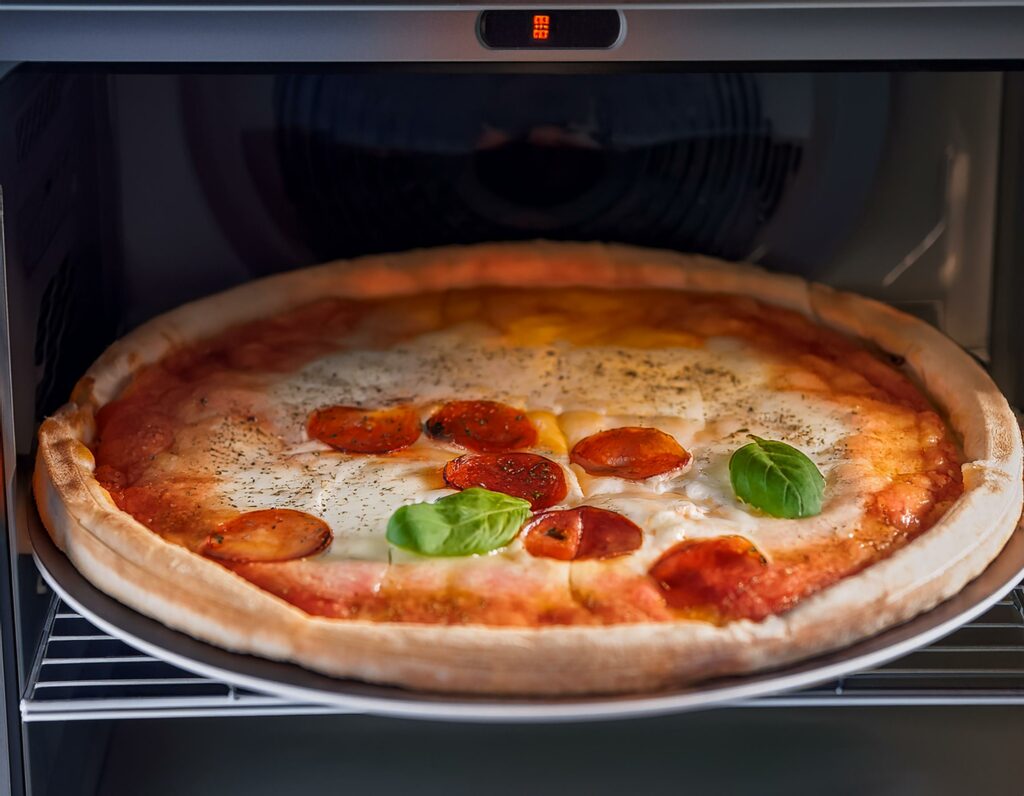
- Préchauffez le grille-pain four à 180°C (350°F).
- Placez la part de pizza directement sur la grille ou une petite plaque.
- Chauffez pendant 5 à 10 minutes jusqu’à ce que la pizza soit chaude et le fromage fondu.
Avantages :
- Résultat proche du four traditionnel : Offre une texture et un goût similaires à ceux obtenus avec un four traditionnel.
- Compact : Idéal pour les petites cuisines ou lorsque vous ne voulez pas utiliser un grand four.
Inconvénients :
- Capacité limitée : Vous pouvez généralement réchauffer une ou deux parts à la fois, pas une pizza entière.
- Temps de préchauffage : Nécessite un préchauffage, ce qui prend un peu de temps.
Utiliser un cuiseur vapeur
Méthode :
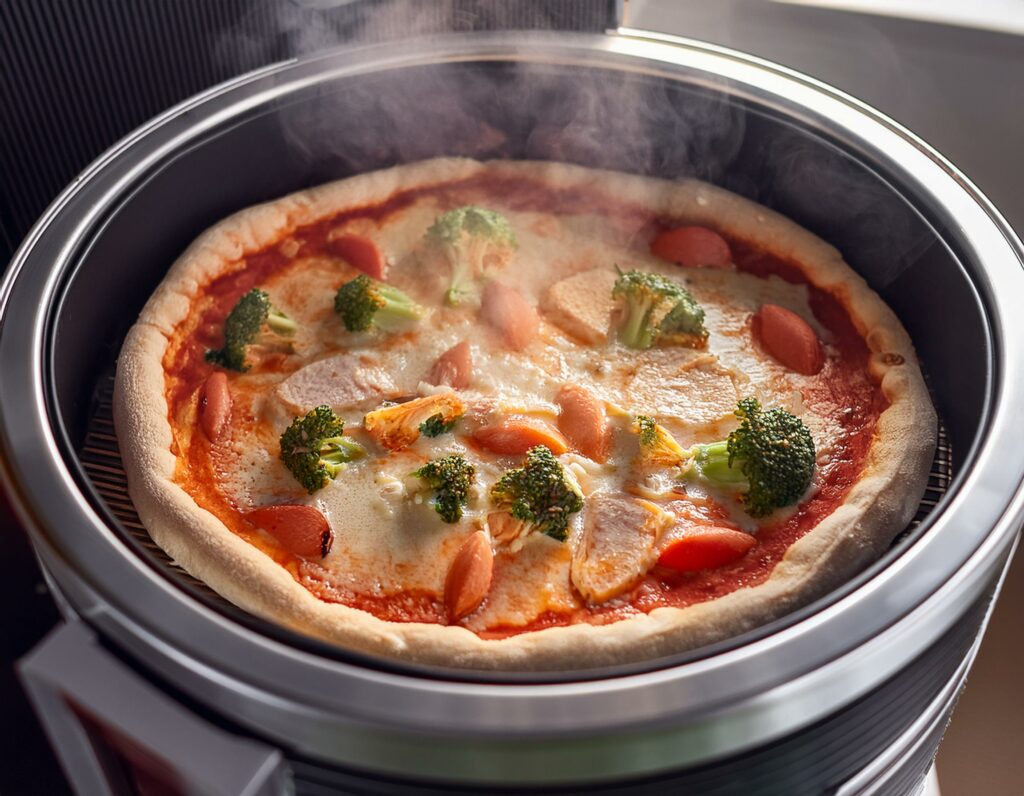
- Placez la pizza sur un panier vapeur au-dessus d’une casserole d’eau bouillante.
- Couvrez et laissez chauffer pendant 5 à 10 minutes.
Avantages :
- Préservation de l’humidité : Le cuiseur vapeur aide à conserver l’humidité, empêchant la pizza de se dessécher.
- Chauffage uniforme : La vapeur chauffe uniformément la pizza.
Inconvénients :
- Croûte moins croustillante : La vapeur peut rendre la croûte moins croustillante.
- Temps de préparation : Peut être plus long que d’autres méthodes.
Utiliser un barbecue ou une grille extérieure
Méthode :
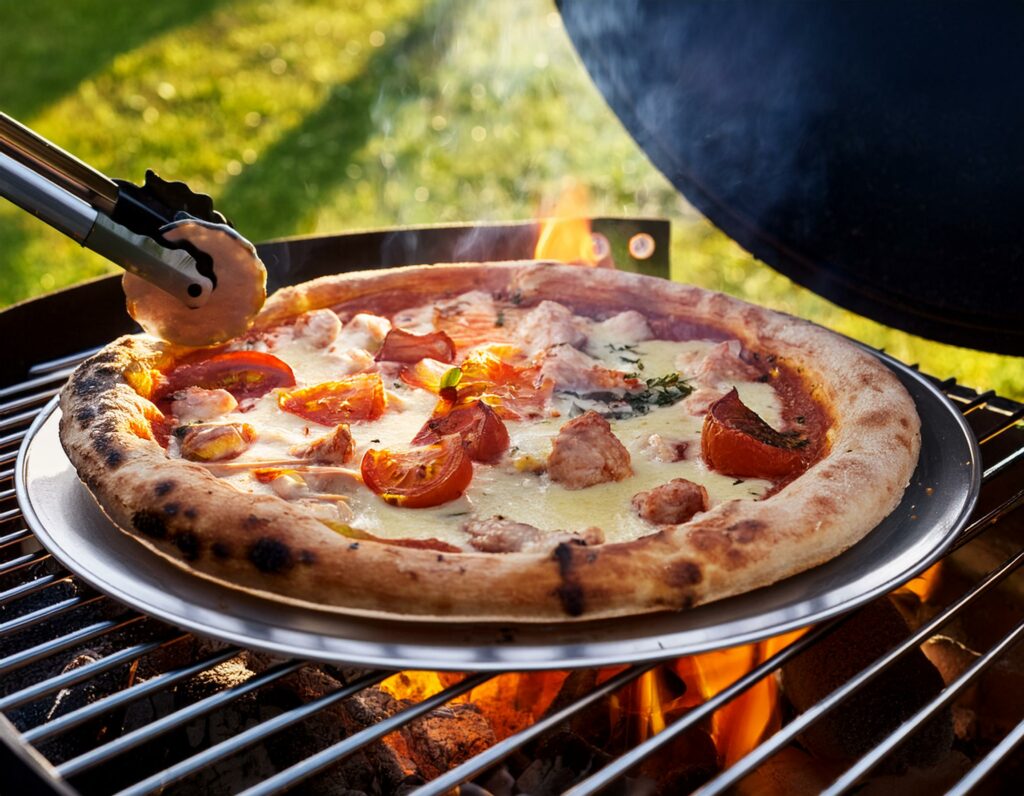
- Préchauffez le barbecue à feu moyen.
- Placez la pizza sur la grille.
- Couvrez et laissez chauffer pendant 5 à 10 minutes, en vérifiant régulièrement.
Avantages :
- Chauffage uniforme : La chaleur du barbecue réchauffe la pizza uniformément.
- Ajout de saveur : Le barbecue peut ajouter une légère saveur fumée à la pizza.
Inconvénients :
- Surveillance nécessaire : Nécessite une attention constante pour éviter de brûler la pizza.
- Conditions extérieures : Peut ne pas être pratique par mauvais temps ou si vous n’avez pas accès à un barbecue.
Comment stocker une pizza afin de maintenir ses valeurs nutritionnelles lorsqu’elle est réchauffée ?
La manière dont vous stockez votre pizza a un impact significatif sur sa qualité et ses valeurs nutritionnelles lorsque vous la réchauffez.
Suivre quelques étapes simples peut vous aider à préserver les nutriments, la saveur et la texture de votre pizza.
Voici un guide pour stocker votre pizza correctement :
- Laisser la pizza refroidir :
Avant de stocker une pizza, laissez-la refroidir à température ambiante pendant environ 30 minutes. Il est important de ne pas placer une pizza chaude directement au réfrigérateur, car cela peut créer de la condensation, rendant la croûte détrempée. - Utiliser des contenants hermétiques ou du film plastique :
Placez les parts de pizza dans des contenants hermétiques ou enveloppez-les individuellement dans du film plastique ou du papier aluminium. Assurez-vous que le contenant ou l’emballage est bien scellé pour éviter l’exposition à l’air. - Étiquetage et datage :
Étiquetez le contenant ou l’emballage avec la date de stockage. Cela vous aidera à garder une trace de la durée pendant laquelle la pizza a été conservée. - Stockage au réfrigérateur :
Placez la pizza emballée dans la partie principale du réfrigérateur, où la température est la plus constante. La pizza peut être conservée au réfrigérateur pendant 3 à 4 jours. - Congélation pour une conservation prolongée :
Si vous ne prévoyez pas de consommer la pizza dans les 3 à 4 jours, vous pouvez la congeler. Pour ce faire, enveloppez les parts de pizza dans du film plastique, puis placez-les dans des sacs de congélation en chassant autant d’air que possible. - Décongélation correcte :
Pour décongeler la pizza, placez-la au réfrigérateur pendant quelques heures ou toute la nuit. Évitez de décongeler à température ambiante, car cela peut favoriser la croissance bactérienne.