La vitamine D est essentielle à notre santé globale, jouant un rôle crucial dans la régulation du calcium et le maintien de la santé osseuse. Cependant, ses bienfaits ne s’arrêtent pas là.
Une carence en vitamine D peut avoir des répercussions importantes sur notre poids.
En effet, des niveaux insuffisants de cette vitamine sont souvent associés à une prise de poids et peuvent compliquer la gestion de votre poids.
Dans cet article, nous explorerons en détail comment la vitamine D peut influencer votre poids, les autres conséquences d’une carence, et comment y remédier efficacement.
- Qu’est-ce que la vitamine D ?
- En quoi la vitamine D peut-elle affecter la prise de poids ?
- Quels sont les autres effets d’un manque de vitamine D ?
- Comment savoir si vous avez une carence en vitamine D ?
- Comment faire remonter la vitamine D rapidement et éviter la prise de poids ?
- Quelle durée pour une cure de vitamine D ?
- Pourquoi prendre de la vitamine D le soir ?
Qu’est-ce que la vitamine D ?
La vitamine D, souvent appelée la « vitamine du soleil« , est une vitamine liposoluble essentielle pour le bon fonctionnement de notre organisme.
Elle se distingue des autres vitamines par sa capacité à être synthétisée par notre corps lorsqu’il est exposé aux rayons UVB du soleil.
La vitamine D est disponible sous deux formes principales : la vitamine D2 (ergocalciférol) que l’on trouve dans certains aliments végétaux et suppléments, et la vitamine D3 (cholécalciférol), présente dans les aliments d’origine animale et également produite par la peau sous l’effet du soleil.
Cette vitamine joue un rôle clé dans l’absorption du calcium et du phosphore, essentiels pour la santé des os et des dents.
Elle participe également au bon fonctionnement du système immunitaire, à la régulation de l’inflammation et à de nombreux autres processus biologiques et peut être complétée par des gélules d’oméga 3 pour un soutien supplémentaire.
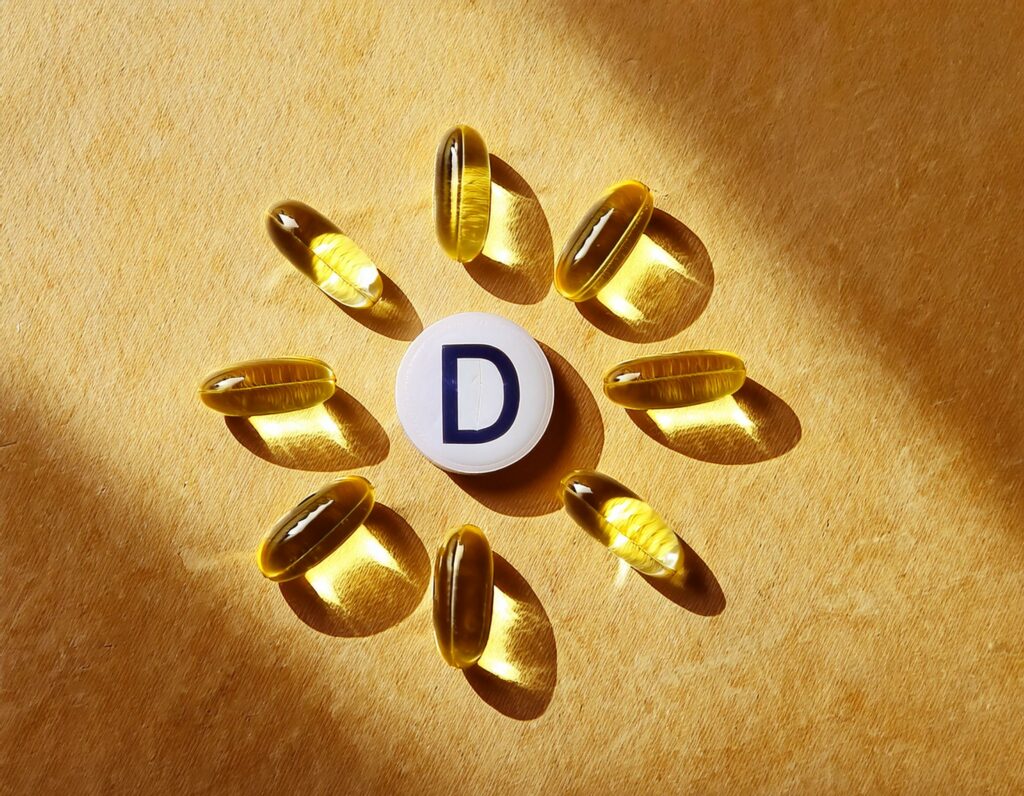
En quoi la vitamine D peut-elle affecter la prise de poids ?
La relation entre la vitamine D et la prise de poids est complexe et fait l’objet de nombreuses études.
Une carence en vitamine D pourrait influencer le poids corporel de plusieurs manières :
- Métabolisme et stockage des graisses : La vitamine D joue un rôle dans le métabolisme des graisses. Une carence pourrait ralentir ce processus, entraînant une augmentation du stockage des graisses et donc une prise de poids.
- Appétit et satiété : La vitamine D influence la production de leptine, une hormone qui régule l’appétit. Une carence en vitamine D pourrait diminuer les niveaux de leptine, augmentant ainsi la sensation de faim et la consommation calorique.
- Activité physique et énergie : Les niveaux de vitamine D influencent également les niveaux d’énergie et la force musculaire. Une carence peut entraîner de la fatigue, réduisant l’activité physique et favorisant ainsi la prise de poids.
Une carence en vitamine D pourrait influencer le poids corporel de plusieurs manières :
- Métabolisme et stockage des graisses : La vitamine D joue un rôle dans le métabolisme des graisses. Une carence pourrait ralentir ce processus, entraînant une augmentation du stockage des graisses et donc une prise de poids.
- Appétit et satiété : La vitamine D influence la production de leptine, une hormone qui régule l’appétit. Une carence en vitamine D pourrait diminuer les niveaux de leptine, augmentant ainsi la sensation de faim et la consommation calorique.
- Activité physique et énergie : Les niveaux de vitamine D influencent également les niveaux d’énergie et la force musculaire. Une carence peut entraîner de la fatigue, réduisant l’activité physique et favorisant ainsi la prise de poids.
Pour plus d’informations sur la nutrition pour un mode de vie actif, consultez cet article sur la nutrition idéale pour un sportif.
Quels sont les autres effets d’un manque de vitamine D ?
Outre la prise de poids, une carence en vitamine D peut avoir de nombreuses autres conséquences sur la santé :
- Ostéoporose et fractures : Un faible taux de vitamine D peut entraîner une diminution de la densité osseuse, augmentant le risque de fractures et d’ostéoporose.
- Faiblesse musculaire : La vitamine D est essentielle pour la fonction musculaire. Une carence peut provoquer des douleurs et une faiblesse musculaire.
- Système immunitaire affaibli : La vitamine D joue un rôle dans la modulation du système immunitaire. Une carence peut rendre l’organisme plus susceptible aux infections.
- Dépression et troubles de l’humeur : Des études ont montré une association entre la carence en vitamine D et un risque accru de dépression et de troubles de l’humeur.
- Maladies chroniques : Un faible niveau de vitamine D est associé à un risque accru de maladies chroniques telles que le diabète, les maladies cardiovasculaires et certains cancers.
Comment savoir si vous avez une carence en vitamine D ?
Pour déterminer si vous souffrez d’une carence en vitamine D, plusieurs signes et symptômes peuvent vous alerter :
- Fatigue et faiblesse : Une sensation de fatigue constante et une faiblesse musculaire peuvent indiquer une carence.
- Douleurs osseuses et musculaires : Des douleurs diffuses dans les os et les muscles peuvent être un signe d’insuffisance en vitamine D.
- Maladies fréquentes : Une susceptibilité accrue aux infections peut également être liée à une carence en vitamine D.
Pour un diagnostic précis, une prise de sang mesurant le taux de 25-hydroxyvitamine D est nécessaire.
Consultez votre médecin pour effectuer ce test et obtenir des conseils appropriés.
Comment faire remonter la vitamine D rapidement et éviter la prise de poids ?
- Exposition au soleil : Passez 10 à 30 minutes par jour au soleil sans écran solaire, de préférence le matin ou en fin d’après-midi. Cela permet à votre peau de synthétiser de la vitamine D.
- Alimentation : Consommez des aliments riches en vitamine D comme le poisson gras (saumon, maquereau, sardines), le foie de bœuf, le fromage et les jaunes d’œufs, qui sont aussi bénéfiques pour le foie.
- Suppléments : Si vous avez une carence sévère, des suppléments de vitamine D3 peuvent être nécessaires. Consultez votre médecin pour déterminer la dose appropriée.
- Activité physique : Maintenez une activité physique régulière pour favoriser la santé globale et prévenir la prise de poids.

Quelle durée pour une cure de vitamine D ?
La durée d’une cure de vitamine D dépend de la sévérité de la carence et de la réponse individuelle au traitement.
En général, une cure de plusieurs semaines à quelques mois est recommandée.
Votre médecin pourra ajuster la durée et la dose en fonction de vos besoins spécifiques et des résultats de vos analyses sanguines.
Pourquoi prendre de la vitamine D le soir ?
Prendre de la vitamine D le soir peut avoir certains avantages :
- Absorption optimale : La vitamine D est mieux absorbée lorsqu’elle est prise avec des aliments contenant des graisses. Le repas du soir étant souvent le plus copieux, il peut améliorer l’absorption de la vitamine.
- Cycle circadien : Certains experts pensent que prendre la vitamine D le soir peut mieux correspondre à notre cycle circadien naturel, bien que les preuves scientifiques soient encore limitées.
En conclusion, la vitamine D joue un rôle crucial dans la régulation du poids et la santé globale.
Identifier et traiter une carence peut non seulement aider à prévenir la prise de poids, mais aussi améliorer votre bien-être général.
Pour en savoir plus sur des méthodes efficaces de gestion du poids, vous pouvez consulter notre article sur le régime bonhomme allumette.
Assurez-vous de consulter un professionnel de santé pour obtenir des conseils adaptés à votre situation.