Le pain, cet aliment de base, à la fois humble et universel, se décline en une multitude de variétés à travers le monde. Parmi elles, le pain Viking a suscité un intérêt croissant, notamment pour ses qualités nutritionnelles et son héritage culturel unique.
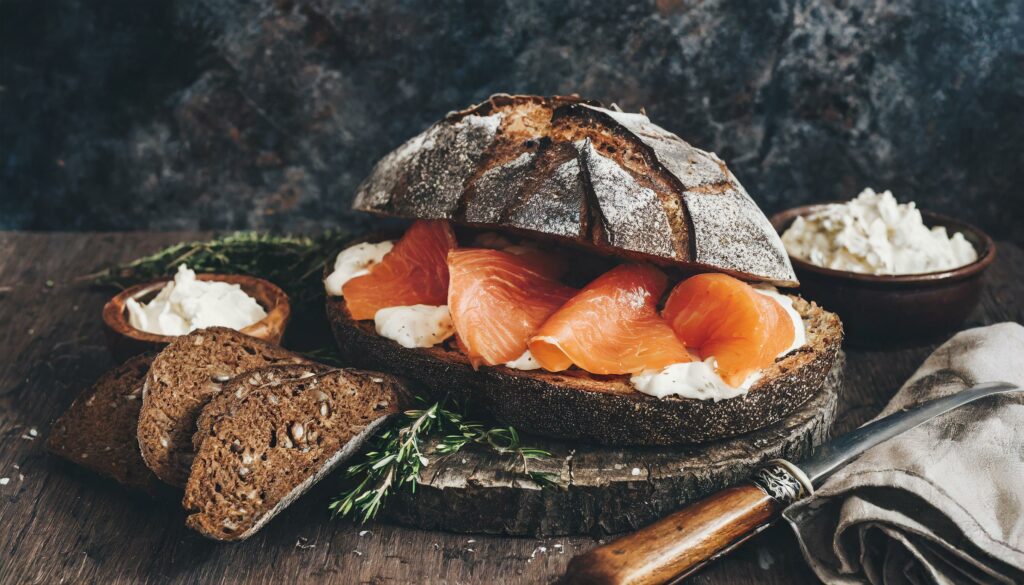
Mais une question se pose souvent : le pain Viking fait-il grossir ? La réponse, comme nous le découvrirons, est plus nuancée qu’un simple « oui » ou « non ».
Si consommé de manière exagérée, comme beaucoup d’aliments, il peut contribuer à une prise de poids.
Cependant, lorsqu’il est intégré avec modération dans une alimentation équilibrée, le pain Viking révèle une histoire bien plus subtile, à la fois riche en nutriments et en culture.
Dans cet article, nous allons explorer les origines de ce pain fascinant, sa composition, ses bienfaits potentiels pour la santé, et comment l’intégrer judicieusement dans notre alimentation quotidienne pour profiter de ses avantages sans craindre de prendre du poids.
Préparez-vous à un voyage gustatif et historique, à la découverte du pain des Vikings !
La composition du pain Viking, un indicateur de prise de poids ?
Le pain Viking, apprécié pour son caractère rustique et sa richesse nutritionnelle, possède une composition qui invite à la réflexion quant à son impact sur le poids.
Examinons de plus près sa composition nutritionnelle détaillée pour mieux comprendre ses effets potentiels sur la santé et le poids.
Informations nutritionnelles estimées du pain Viking pour 100g
- Apport calorique : Environ 250-300 calories
- Glucides : Environ 40-50 g dont environ 2-5 g de sucres
- Lipides : Environ 5-10 g dont 1-2 g d’acides gras saturés et 3-8g d’acides gras insaturés
- Protéines : Environ 8-12 g
- Sodium : Environ 200-400 mg
- Fibres alimentaires : Environ 6-10 g
Considérations nutritionnelles
- Densité calorique : Le pain Viking est plus dense en calories que le pain blanc classique, en raison de sa richesse en grains entiers, graines et noix. Une tranche peut contenir entre 250-300 calories, selon les ingrédients.
- Index glycémique : Généralement plus bas que celui des pains blancs ou raffinés, favorisant une meilleure régulation de la glycémie.
- Satiété : Les fibres et les protéines aident à se sentir rassasié plus longtemps, ce qui peut aider à contrôler l’appétit et la prise de poids.
Le pain Viking, riche en grains entiers, graines et noix, est un aliment nutritif offrant fibres, protéines et bons gras. Cependant, il est aussi plus calorique que le pain blanc classique. La clé pour profiter de ses avantages sans risquer de prendre du poids est la modération.
Si vous faites attention à votre poids, vous pouvez inclure le pain Viking dans votre alimentation, mais avec parcimonie. Pensez à ajuster les portions pour ne pas dépasser votre apport calorique quotidien. Ainsi, consommé de manière réfléchie, le pain Viking peut compléter un régime alimentaire sain sans contribuer à une prise de poids.
Au-delà de la prise de poids potentielle, quels sont les bienfaits du pain Viking ?
Le pain Viking, bien plus qu’un simple aliment, est une source de nombreux bienfaits pour la santé. Sa composition riche en grains entiers, graines et noix le dote de qualités nutritionnelles remarquables.
Richesse en Fibres
Les grains entiers et les graines présents dans le pain Viking sont d’excellentes sources de fibres alimentaires.
Les fibres jouent un rôle crucial dans la santé digestive, aidant à prévenir la constipation et à maintenir un système digestif sain.
De plus, elles contribuent à la sensation de satiété, ce qui peut aider à contrôler l’appétit et à réguler le poids.
Apport en Protéines
Le pain Viking est également une bonne source de protéines, surtout lorsque des graines et des noix y sont ajoutées.
Les protéines sont essentielles pour la construction et la réparation des tissus musculaires et jouent un rôle dans de nombreux processus biologiques.
Elles sont également importantes pour la satiété, ce qui peut aider à réduire la surconsommation de nourriture.
Si vous êtes en déficit de protéines, vous pouvez envisager des substituts de repas protéinés afin d’équilibrer ce manque.
Vitamines et Minéraux
Les grains entiers fournissent une variété de vitamines et de minéraux essentiels.
Par exemple, le seigle est une bonne source de magnésium, essentiel pour la santé des os et la régulation de la pression artérielle.
Les graines peuvent apporter du zinc, important pour le système immunitaire et du fer, crucial pour le transport de l’oxygène dans le sang.
Acides Gras Essentiels
Les noix et certaines graines ajoutées au pain Viking sont riches en acides gras essentiels, comme les oméga-3.
Ces acides gras sont importants pour la santé cardiovasculaire, peuvent aider à réduire l’inflammation et jouent un rôle dans la santé cérébrale.
Vous pouvez également compléter votre alimentation en prenant des gélules d’oméga 3 sans danger pour vous.
Le pain Viking, avec sa composition riche et diversifiée, offre plus que des calories.
Il apporte des fibres, des protéines, des vitamines, des minéraux et des acides gras essentiels, tous contribuant à une alimentation équilibrée et à une bonne santé globale.
Sa consommation, dans le cadre d’un régime alimentaire varié et équilibré, peut donc être un excellent choix pour ceux qui cherchent à enrichir leur alimentation avec des aliments nutritifs et savoureux.
Comment intégrer le pain Viking dans une alimentation équilibrée pour éviter la prise de poids ?
Bien que le pain Viking soit riche en nutriments, sa densité calorique nécessite une approche réfléchie pour l’intégrer dans une alimentation équilibrée sans favoriser la prise de poids.
Voici quelques conseils pratiques pour profiter de ce pain nutritif tout en maintenant un régime alimentaire sain.
Portion contrôlée
- Mesurer les portions : Commencez par être conscient de la taille de vos portions. Une tranche de pain Viking est souvent suffisante en raison de sa densité.
- Écouter son corps : Soyez attentif à votre sensation de satiété. Le pain Viking étant riche en fibres, il peut vous rassasier rapidement.
Équilibrer les macros
- Associer avec des protéines maigres : Pour un repas équilibré, accompagnez le pain Viking de protéines maigres comme le poulet, le poisson ou les légumineuses.
- Inclure des légumes : Ajoutez une abondance de légumes frais ou cuits pour un repas nutritif et équilibré en macro et micronutriments.
Utilisation en snack sain
- Snacks équilibrés : Utilisez une petite tranche de pain Viking avec des garnitures saines comme de l’avocat, du beurre de noix ou une tranche de fromage à faible teneur en matières grasses pour un snack rassasiant.
- Alternance avec d’autres aliments : Intégrez le pain Viking dans vos collations en alternance avec d’autres options saines comme des fruits ou des yaourts nature.
Attention aux garnitures
- Choisir des garnitures saines : Privilégiez des garnitures faibles en sucre et en graisses saturées. Optez pour des confitures sans sucre ajouté, du fromage frais ou des légumes.
- Éviter les garnitures caloriques : Méfiez-vous des garnitures riches en sucre ou en graisses comme la pâte à tartiner chocolatée ou le beurre en excès.
Adapter selon l’activité physique
- Après l’exercice : Le pain Viking peut être un excellent choix post-exercice pour refaire le plein de glycogène grâce à ses glucides complexes.
- Journées moins actives : Les jours moins actifs, réduisez la portion de pain Viking ou choisissez une alternative plus légère.
Intégrer le pain Viking dans une alimentation équilibrée est tout à fait possible en prêtant attention aux portions, en équilibrant les macronutriments, et en choisissant des garnitures saines.
L’objectif est de profiter des avantages nutritionnels de ce pain sans excéder les besoins caloriques, en harmonie avec votre style de vie et votre niveau d’activité physique.