À la date de la dernière modification de cet article, l’eau gazeuse la moins salée est La Salvetat.
Ensuite, vous trouvez en deuxième et troisième position Perrier et Volvic gazeuse. Ces eaux se distinguent par leur faible teneur en sel, idéales pour ceux qui surveillent leur consommation de sodium.
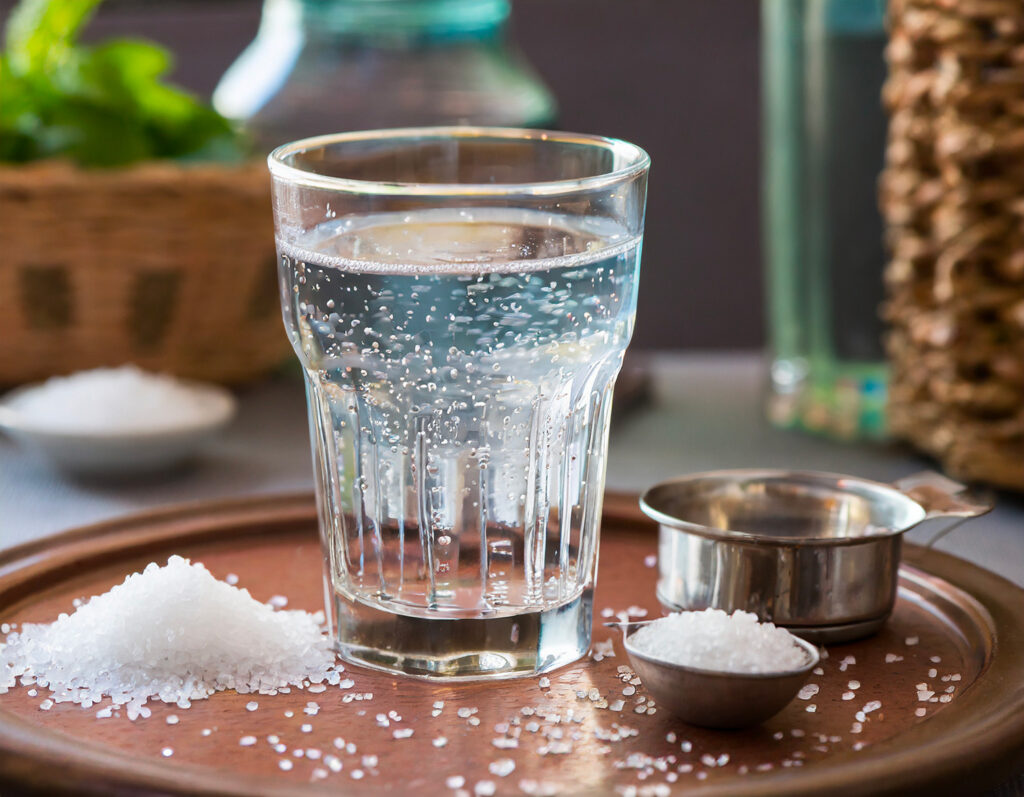
La consommation modérée de sel est un élément clé d’une alimentation saine. Alors que le sel est nécessaire au bon fonctionnement de notre corps, une consommation excessive peut contribuer à divers problèmes de santé, notamment l’hypertension artérielle et les maladies cardiovasculaires.
Les bienfaits pour la santé de choisir une eau gazeuse peu salée sont multiples. Elle peut aider à maintenir un équilibre hydrique sain dans le corps, réduire le risque d’hypertension et offrir une option plus saine comparée aux sodas et autres boissons sucrées. De plus, pour les personnes soucieuses de leur ligne ou cherchant à maintenir un poids santé, choisir une eau gazeuse peu salée est un choix judicieux, car elle ne contient pas de calories supplémentaires.
Savoir sélectionner judicieusement l’eau gazeuse la moins salée est essentiel. Cela implique de lire attentivement les étiquettes pour comprendre la composition et la teneur en sel de chaque marque. Nous vous guiderons à travers ce processus, en vous fournissant des conseils pratiques pour faire des choix éclairés.
En somme, cet article vous offre une exploration complète de l’univers des eaux gazeuses peu salées, en mettant l’accent sur leur importance pour une alimentation équilibrée et un style de vie sain. Que vous soyez un amateur de boissons gazeuses à la recherche d’une alternative plus saine ou simplement curieux d’en savoir plus, vous trouverez ici toutes les informations nécessaires pour faire un choix éclairé.
Comprendre le sel dans l’eau gazeuse
L’origine du sel dans l’eau gazeuse
L’origine du sel dans l’eau gazeuse est un aspect fondamental à comprendre pour tous ceux qui cherchent à surveiller leur consommation de sodium. Le sel, ou sodium, présent dans l’eau gazeuse provient principalement de deux sources : la source naturelle de l’eau et l’ajout durant le processus de production.
Les eaux gazeuses issues de sources minérales naturelles peuvent contenir des minéraux dissous, dont le sodium. Ces minéraux sont naturellement présents dans l’eau, résultant du contact de l’eau avec des roches et des minéraux au cours de son parcours souterrain. La teneur en sel de ces eaux peut donc varier en fonction de la géologie de la région de la source. Par exemple, une eau provenant d’une région riche en roches salées aura naturellement une teneur plus élevée en sodium.
D’autre part, certaines marques d’eau gazeuse ajoutent du sel durant le processus de production pour améliorer le goût ou pour d’autres raisons techniques. Cette pratique peut augmenter significativement la teneur en sodium de l’eau gazeuse.
Le traitement de l’eau joue également un rôle clé dans sa teneur finale en sel. Les méthodes de filtration et de purification peuvent affecter la quantité de minéraux et de sel dans l’eau. Les eaux filtrées ou purifiées ont souvent une teneur réduite en minéraux, y compris en sodium.
En comprenant l’origine du sel dans l’eau gazeuse et les facteurs qui influencent sa teneur en sodium, les consommateurs peuvent faire des choix plus éclairés. Ils peuvent ainsi privilégier des eaux gazeuses provenant de sources naturelles avec une faible teneur en sel ou opter pour des marques qui ne rajoutent pas de sel durant la production.
Cette section a pour objectif de vous guider dans le choix d’une eau gazeuse adaptée à vos besoins en sodium, en prenant en compte la source, le traitement et les pratiques de production de l’eau.
Les effets du sel sur la santé
Le sodium, un composant majeur du sel de table, joue un rôle crucial dans le fonctionnement du corps humain, notamment dans la régulation des fluides et la transmission nerveuse. Cependant, une consommation excessive de sel peut avoir des conséquences néfastes sur la santé, en particulier sur la pression artérielle.
Une consommation élevée de sel peut entraîner une augmentation de la pression artérielle, un facteur de risque majeur pour les maladies cardiovasculaires telles que les crises cardiaques et les accidents vasculaires cérébraux. En effet, le sel excédentaire dans le sang attire l’eau, augmentant ainsi le volume de sang dans les artères et, par conséquent, la pression sur les parois des vaisseaux sanguins.
En outre, un apport élevé en sodium peut affecter la santé rénale, car les reins doivent travailler plus dur pour filtrer l’excès de sel. Cela peut conduire à une diminution de la fonction rénale au fil du temps.
Choisir une eau gazeuse faible en sel est donc une approche bénéfique pour réduire la consommation globale de sodium, contribuant ainsi à la prévention de l’hypertension et à la promotion d’une meilleure santé cardiovasculaire. De plus, une consommation réduite de sel peut aider à maintenir un équilibre hydrique optimal dans le corps, évitant ainsi la rétention d’eau et le gonflement.
Cette section souligne l’importance de la modération dans la consommation de sel et explique comment le choix d’une eau gazeuse faible en sel peut être un pas vers une meilleure santé et un bien-être général.
Comment identifier l’eau gazeuse la moins salée ?
Lire les étiquettes : un guide pratique
Lire les étiquettes des eaux gazeuses est essentiel pour déterminer leur teneur en sel. Les informations nutritionnelles sur l’emballage fournissent des détails précieux sur la quantité de sodium par litre ou par portion. Pour identifier une eau gazeuse faible en sel, recherchez les termes tels que « faible en sodium » ou « peu salée ». La teneur en sodium est généralement indiquée en milligrammes (mg). Une teneur en sodium inférieure à 20 mg par litre est considérée comme faible.
De la même manière que nous lisons attentivement les teneurs en lipides, glucides, et protéines sur les étiquettes alimentaires pour une alimentation équilibrée, il est tout aussi crucial de comprendre et d’évaluer la teneur en sel de nos boissons. Cela devient une part essentielle de la gestion consciente de notre régime alimentaire et de notre santé.
Il est également important de comprendre la différence entre le « sodium » et le « sel » sur les étiquettes. Le sodium est un composant du sel, et sa quantité est souvent inférieure à la teneur totale en sel. Par conséquent, assurez-vous de vérifier si les informations se réfèrent au sodium ou au sel pour une évaluation précise.
Les marques leaders et leurs teneurs en sel
Parmi les marques d’eau gazeuse, La Salvetat, Perrier et Volvic gazeuse se distinguent par leur faible teneur en sel. La Salvetat, par exemple, affiche une teneur en sodium de seulement 0,005g/l, ce qui en fait un excellent choix pour un régime pauvre en sodium. Perrier et Volvic gazeuse sont aussi des options intéressantes, avec des teneurs en sodium relativement basses comparées à d’autres marques sur le marché.
En comparant les teneurs en sel de ces marques, il est possible de choisir une eau gazeuse qui correspond à vos besoins nutritionnels et à vos préférences gustatives. Cette comparaison vous aidera également à comprendre comment différentes sources d’eau et processus de production peuvent influencer la teneur en sel de l’eau gazeuse.
En conclusion, la sélection d’une eau gazeuse faible en sel nécessite une lecture attentive des étiquettes et une comparaison des différentes marques disponibles. Cette démarche vous permettra de profiter des bienfaits d’une eau gazeuse tout en contrôlant votre consommation de sel.
Les avantages de l’eau gazeuse faible en sel
Bienfaits pour la santé
L’eau gazeuse faible en sel offre plusieurs avantages pour la santé, particulièrement pour le système cardiovasculaire et l’équilibre hydrique du corps. Une consommation réduite en sodium aide à prévenir l’hypertension artérielle, un facteur de risque majeur pour les maladies cardiaques et les accidents vasculaires cérébraux. La réduction de la pression artérielle diminue le stress sur le cœur et les vaisseaux sanguins, contribuant ainsi à une meilleure santé cardiovasculaire.
De plus, une faible teneur en sel dans l’eau gazeuse aide à maintenir un équilibre hydrique approprié dans le corps. L’excès de sel peut entraîner une rétention d’eau, provoquant des gonflements et une charge supplémentaire pour le cœur et les reins. En choisissant une eau gazeuse faible en sel, vous aidez votre corps à maintenir une hydratation équilibrée sans les effets indésirables d’une consommation excessive de sel.
Comparaison avec l’eau gazeuse standard
En comparant l’eau gazeuse faible en sel avec les eaux gazeuses standard, plusieurs différences clés émergent. Les eaux gazeuses standard peuvent avoir des teneurs en sel plus élevées, ce qui peut contribuer à une consommation accrue de sodium. Cette augmentation de la consommation de sel est associée à divers problèmes de santé, tels que l’hypertension et les déséquilibres hydriques.
En revanche, l’eau gazeuse faible en sel offre une alternative plus saine. Elle permet aux consommateurs de profiter des plaisirs d’une boisson gazeuse sans les risques liés à une consommation élevée de sodium. Cela est particulièrement bénéfique pour les personnes soucieuses de leur santé cardiovasculaire, celles qui gèrent des conditions telles que l’hypertension, ou celles qui cherchent à maintenir un poids sain.
En conclusion, choisir une eau gazeuse faible en sel plutôt qu’une eau gazeuse standard peut avoir un impact significatif sur votre santé globale. Ce choix favorise non seulement une meilleure santé cardiovasculaire, mais contribue également à un meilleur équilibre hydrique et à un mode de vie plus sain.
Intégrer l’eau gazeuse peu salée dans votre quotidien
Recettes et astuces de consommation
L’eau gazeuse peu salée peut être un ajout rafraîchissant et sain à votre routine quotidienne. Voici quelques idées de recettes et astuces pour l’intégrer :
- Boissons aromatisées : ajoutez des tranches de fruits frais comme le citron, la lime, l’orange, ou des baies à votre eau gazeuse pour une boisson aromatisée naturellement. Ces ajouts non seulement rehaussent le goût mais apportent également des nutriments supplémentaires.
- Cocktails sans alcool : utilisez l’eau gazeuse comme base pour des mocktails. Mélangez-la avec du jus de fruits frais, un peu de sirop d’agave ou de miel pour une douceur naturelle, et garnissez de menthe ou de basilic pour un cocktail sans alcool délicieux.
- Thé pétillant : infusez votre thé préféré, laissez-le refroidir, puis mélangez-le avec de l’eau gazeuse pour une boisson rafraîchissante et originale.
- Astuce de hydratation : si vous avez du mal à boire suffisamment d’eau, remplacez une partie de votre consommation d’eau plate par de l’eau gazeuse. Cela peut rendre l’hydratation plus agréable et variée.

Conseils pour une hydratation saine
Intégrer l’eau gazeuse peu salée dans une routine d’hydratation peut être bénéfique pour plusieurs raisons :
- Alternative saine aux boissons sucrées : si vous êtes tenté par les sodas ou les boissons sucrées, l’eau gazeuse peu salée est une excellente alternative pour satisfaire votre envie de quelque chose de pétillant sans les inconvénients du sucre ajouté.
- Stimule la digestion : l’eau gazeuse peut aider à stimuler la digestion grâce à ses bulles. Boire un verre d’eau gazeuse peu salée avant ou après les repas peut favoriser une meilleure digestion.
- Prévention de la déshydratation : elle peut être plus attrayante que l’eau plate, incitant ainsi à une consommation régulière tout au long de la journée, ce qui est crucial pour éviter la déshydratation.
- Personnalisation facile : vous pouvez personnaliser votre eau gazeuse avec des ingrédients sains selon vos goûts, ce qui en fait une option versatile pour rester hydraté.
En somme, l’eau gazeuse peu salée offre une manière délicieuse et saine de rester hydraté tout au long de la journée. Elle peut facilement être intégrée dans une variété de recettes et de boissons, et elle constitue une alternative formidable aux boissons sucrées ou sodas.
Conclusion : l’importance de l’eau gazeuse peu salée pour une vie saine
Pour conclure, l’eau gazeuse peu salée est un choix excellent pour ceux qui aspirent à une vie plus saine. Non seulement elle offre une alternative rafraîchissante aux boissons sucrées, mais elle contribue également de manière significative à un régime alimentaire équilibré et à une bonne santé cardiovasculaire. En choisissant des marques comme La Salvetat, Perrier, et Volvic gazeuse, vous réduisez votre consommation de sodium tout en profitant d’une boisson agréable et gazeuse.
En intégrant l’eau gazeuse peu salée dans votre quotidien, que ce soit à travers des recettes créatives ou comme une boisson rafraîchissante en soi, vous faites un pas vers un mode de vie plus sain et équilibré.
En outre, si vous souhaitez aussi découvrir plus sur une autre boisson essentielle pour la santé, le thé, ne manquez pas de consulter notre article dédié.
Le thé connu pour aider à voir un ventre plat, offre une variété de bienfaits pour la santé et peut être un complément parfait à votre routine d’hydratation et de bien-être. Que ce soit pour ses propriétés antioxydantes, ses effets apaisants ou ses saveurs diverses, le thé est une boisson à explorer pour tous ceux qui cherchent à enrichir leur régime alimentaire.
Restez donc à l’affût pour en apprendre davantage sur les différents types de thés et comment les intégrer efficacement dans votre vie quotidienne pour une santé optimale.