Est-ce que les bonbons sans sucre font grossir ? Dans une société de plus en plus soucieuse de sa santé, les bonbons sans sucre sont apparus comme une promesse alléchante : le plaisir sucré sans les inconvénients. Ces bonbons, vantés pour leur absence de sucre traditionnel, ont rapidement gagné en popularité auprès de ceux qui cherchent à limiter leur consommation de sucre, que ce soit pour des raisons de santé, comme le diabète, ou pour la gestion du poids. Cependant, la question se pose : ces alternatives sans sucre sont-elles réellement une option plus saine, ou est-ce simplement une astuce marketing ingénieuse ?
L’industrie des bonbons sans sucre a innové en proposant une vaste gamme de produits, allant des gommes fruitées aux chocolats onctueux, promettant le même goût délicieux que leurs homologues sucrés. Mais sous ces promesses, se cachent divers substituts de sucre, tels que les alcools de sucre, les édulcorants artificiels ou naturels. Ces substituts, bien que réduisant ou éliminant le sucre traditionnel, peuvent avoir leurs propres effets sur la santé, pas toujours mieux compris par le grand public.
L’objectif de cet article est de dévoiler la vérité sur les bonbons sans sucre. Nous voulons fournir aux lecteurs une analyse complète et nuancée de ces produits. En explorant à la fois les avantages et les inconvénients, nous visons à offrir une perspective équilibrée sur leur impact potentiel sur la santé et la gestion du poids.
Il ne s’agit pas seulement de dire si les bonbons sans sucre sont « bons » ou « mauvais », mais de fournir une compréhension plus profonde de ce que signifie choisir ces alternatives dans le cadre d’une alimentation consciente et équilibrée. En fin de compte, vous, le lecteur, serez armé des connaissances nécessaires pour faire des choix éclairés, en sachant ce que vous consommez réellement lorsque vous optez pour un bonbon sans sucre.
Comprendre les bonbons sans sucre
Qu’est-ce qui remplace le sucre ?
Quand le sucre traditionnel est retiré des bonbons, il doit être remplacé par quelque chose pour maintenir le goût sucré tant recherché. Les bonbons sans sucre utilisent divers édulcorants, qui peuvent être artificiels ou naturels. Parmi les édulcorants artificiels, on trouve couramment l’aspartame et le sucralose, connus pour leur pouvoir sucrant élevé et leur faible apport calorique. D’autre part, les édulcorants naturels comme la stévia et les alcools de sucre (comme le xylitol ou l’érythritol) sont également populaires. Chacun de ces substituts a un profil gustatif unique et peut avoir un impact différent sur la santé.
Les édulcorants artificiels, par exemple, sont souvent critiqués pour leur origine synthétique et sont associés dans certains cas à des controverses sur leur sécurité à long terme. Les édulcorants naturels, bien que perçus comme plus sains, peuvent également avoir des effets secondaires, comme des troubles digestifs en cas de consommation excessive. Il est donc essentiel de comprendre ces alternatives pour faire des choix éclairés.
Analyse des ingrédients typiques
Au-delà des édulcorants, les bonbons sans sucre contiennent un éventail d’ingrédients supplémentaires. Parmi eux, on trouve des arômes, naturels ou artificiels, pour reproduire les goûts fruités, chocolatés ou autres que nous aimons tant. Les colorants, qu’ils soient d’origine naturelle ou synthétique, sont également utilisés pour rendre ces bonbons visuellement attrayants. De plus, des additifs tels que des agents de texture et de conservation sont souvent présents pour améliorer la sensation en bouche et prolonger la durée de conservation des produits.
Cependant, certains de ces additifs peuvent susciter des inquiétudes en matière de santé, en particulier lorsqu’ils sont consommés en grandes quantités. Par exemple, certains colorants artificiels ont été liés à des problèmes de santé dans des études controversées. Il est donc important de lire attentivement les étiquettes des produits pour savoir exactement ce que vous consommez.
Les différents types de bonbons sans sucre
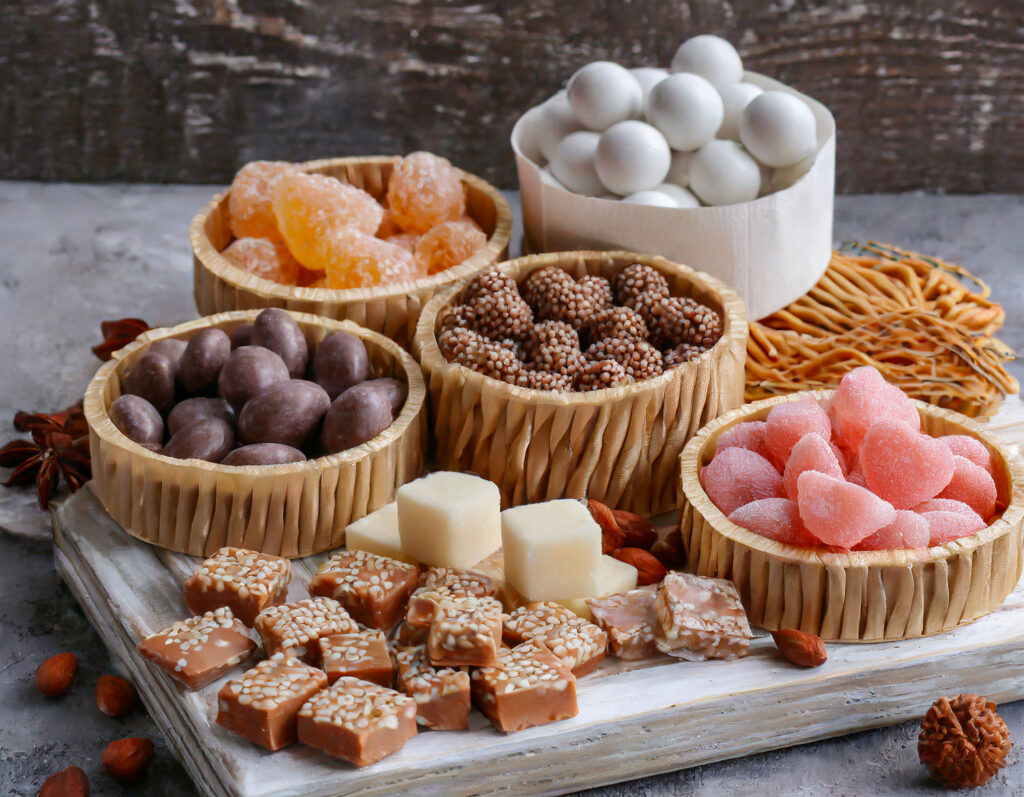
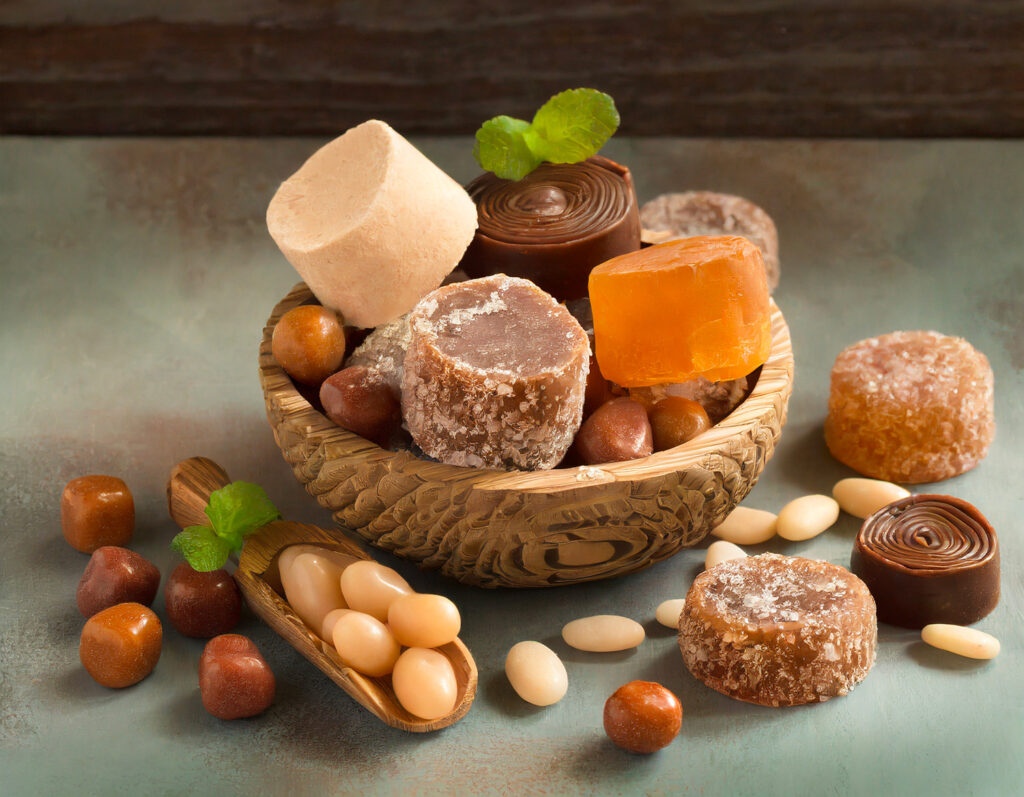
La variété des bonbons sans sucre disponible sur le marché est impressionnante. Elle va des gommes fruitées aux chocolats, en passant par les caramels et les bonbons durs. Chacun de ces types a ses propres particularités en termes de texture, de goût et d’ingrédients.
Les gommes, par exemple, sont souvent fabriquées avec des gélifiants comme la gélatine ou des alternatives végétariennes, et leur texture peut varier de très molle à élastique. Les chocolats sans sucre sont généralement élaborés avec des substituts de sucre et des graisses pour imiter la texture riche et onctueuse du chocolat traditionnel. Les bonbons durs, quant à eux, utilisent différents types d’édulcorants pour obtenir la même sensation sucrée et croquante sans le sucre.
Cette diversité offre aux consommateurs un large éventail de choix, mais il est important de se rappeler que « sans sucre » ne signifie pas nécessairement « sans calories » ou « sain ». Chaque type de bonbon a son propre profil nutritionnel et peut avoir des effets différents sur la santé.
Impact nutritionnel des bonbons sans sucre
Valeur calorique et composition
Un point clé à considérer avec les bonbons sans sucre est leur contenu calorique. Bien que l’absence de sucre traditionnel puisse suggérer une option plus légère, ces bonbons contiennent souvent d’autres ingrédients qui contribuent à leur teneur en calories. Les édulcorants comme les alcools de sucre ont une densité calorique moindre que le sucre ordinaire, mais ils ne sont pas dépourvus de calories. De plus, certains bonbons sans sucre peuvent contenir des graisses ajoutées pour améliorer la texture, ce qui augmente également leur teneur en calories.
Lorsqu’on compare la valeur calorique des bonbons sans sucre à celle des bonbons traditionnels, il est important de noter que, bien que les premiers puissent souvent avoir moins de calories, la différence n’est pas toujours aussi significative qu’on pourrait le croire. Cette analyse permet de comprendre que la consommation de bonbons sans sucre doit toujours être faite avec discernement, surtout si l’objectif est la gestion du poids.
Comparaison avec les bonbons traditionnels
En termes de goût, de texture et de satisfaction globale, les bonbons sans sucre ont fait d’énormes progrès pour se rapprocher de leurs équivalents sucrés. Cependant, des différences subsistent. Les édulcorants utilisés dans les bonbons sans sucre peuvent laisser un arrière-goût distinct qui peut ne pas plaire à tous. La texture peut également varier, avec certains bonbons sans sucre ayant une consistance plus ferme ou plus gommeuse que les bonbons traditionnels.
En matière de satisfaction, certains consommateurs trouvent que les bonbons sans sucre satisfont leur envie de sucre sans les culpabilités liées à la consommation de sucre traditionnel. Cependant, d’autres peuvent ne pas ressentir la même satisfaction, conduisant parfois à une consommation plus importante pour combler ce manque.
Avantages et inconvénients pour la santé
Les bonbons sans sucre présentent certains avantages pour la santé, en particulier pour les personnes surveillant leur consommation de sucre, comme les diabétiques. Leur teneur réduite en sucre et en calories peut être bénéfique dans le cadre d’un régime alimentaire contrôlé. De plus, en évitant le sucre traditionnel, ces bonbons réduisent le risque de caries dentaires, un avantage non négligeable pour la santé bucco-dentaire.
Cependant, il existe également des inconvénients à prendre en compte. La consommation excessive de certains édulcorants, en particulier les alcools de sucre, peut entraîner des problèmes digestifs tels que des ballonnements, des gaz et la diarrhée. De plus, la consommation de bonbons sans sucre peut parfois conduire à une fausse perception de « liberté alimentaire », incitant à une surconsommation qui annule les avantages de l’absence de sucre.
Les bonbons sans sucre et la prise de poids
Mythes et réalités
La croyance répandue selon laquelle les bonbons sans sucre sont une solution miracle pour éviter la prise de poids mérite une analyse approfondie. D’un côté, la réduction du sucre et, dans certains cas, des calories, semble indiquer un impact positif sur la gestion du poids. Cependant, cette perception simpliste ne tient pas compte de la complexité du métabolisme humain et de la façon dont notre corps réagit aux édulcorants.
Des études ont montré que la consommation d’édulcorants peut parfois entraîner une confusion métabolique. Lorsque le corps goûte quelque chose de sucré mais ne reçoit pas les calories attendues, cela peut perturber les signaux de satiété, conduisant potentiellement à une surconsommation d’autres aliments. De plus, certains édulcorants peuvent affecter la flore intestinale et influencer le métabolisme.
Il est donc crucial de comprendre que les bonbons sans sucre ne sont pas une baguette magique pour perdre du poids. Ils peuvent faire partie d’un régime alimentaire équilibré, mais ne doivent pas être considérés comme une solution autonome pour la gestion du poids.
Comment le corps réagit aux édulcorants ?
La façon dont notre corps réagit aux édulcorants est fondamentalement différente de sa réaction au sucre ordinaire. Les édulcorants comme l’aspartame, le sucralose ou la stévia peuvent déclencher la perception du goût sucré sans apporter de calories significatives. Cette absence de calories, bien que bénéfique en termes de réduction de l’apport énergétique, peut néanmoins entraîner des réponses métaboliques inattendues.
Des recherches suggèrent que la consommation régulière d’édulcorants peut altérer la façon dont notre corps réagit au sucre et potentiellement affecter notre capacité à réguler la glycémie. De plus, certains édulcorants peuvent influencer l’appétit et les habitudes alimentaires, parfois en encourageant une plus grande consommation alimentaire en raison de la perception erronée qu’un aliment est « sans conséquence » en termes de calories.
Il est donc essentiel de rester conscient de ces facteurs lors de la consommation de bonbons sans sucre, en reconnaissant que leur impact sur le poids et le métabolisme peut être plus complexe que ce que suggère simplement l’absence de sucre.
Consommation responsable de bonbons sans sucre
Conseils pour une consommation modérée
La modération est la clé, même lorsqu’il s’agit de bonbons sans sucre. Voici quelques conseils pratiques pour savourer ces douceurs tout en maintenant une consommation responsable :
- Fixez des limites : définissez une quantité raisonnable de bonbons à consommer et respectez-la. Cela aide à éviter la surconsommation, souvent facilitée par le sentiment que les bonbons sans sucre sont « sans risque ».
- Écoutez votre corps : soyez attentif aux signaux de satiété de votre corps. Manger lentement et consciemment peut aider à reconnaître quand vous avez suffisamment satisfait votre envie de sucré.
- Variez les plaisirs : intégrez les bonbons sans sucre dans une alimentation variée, plutôt que de les utiliser comme principale source de plaisir gustatif.
- Attention aux Réactions : soyez conscient des effets potentiels des édulcorants, comme les troubles digestifs, et ajustez votre consommation en conséquence.
Alternatives saines aux bonbons
Pour ceux qui cherchent à satisfaire leurs envies de douceurs d’une manière plus saine, voici quelques alternatives :
- Fruits frais ou secs : naturellement sucrés, les fruits sont une excellente alternative pour satisfaire les envies de sucre.
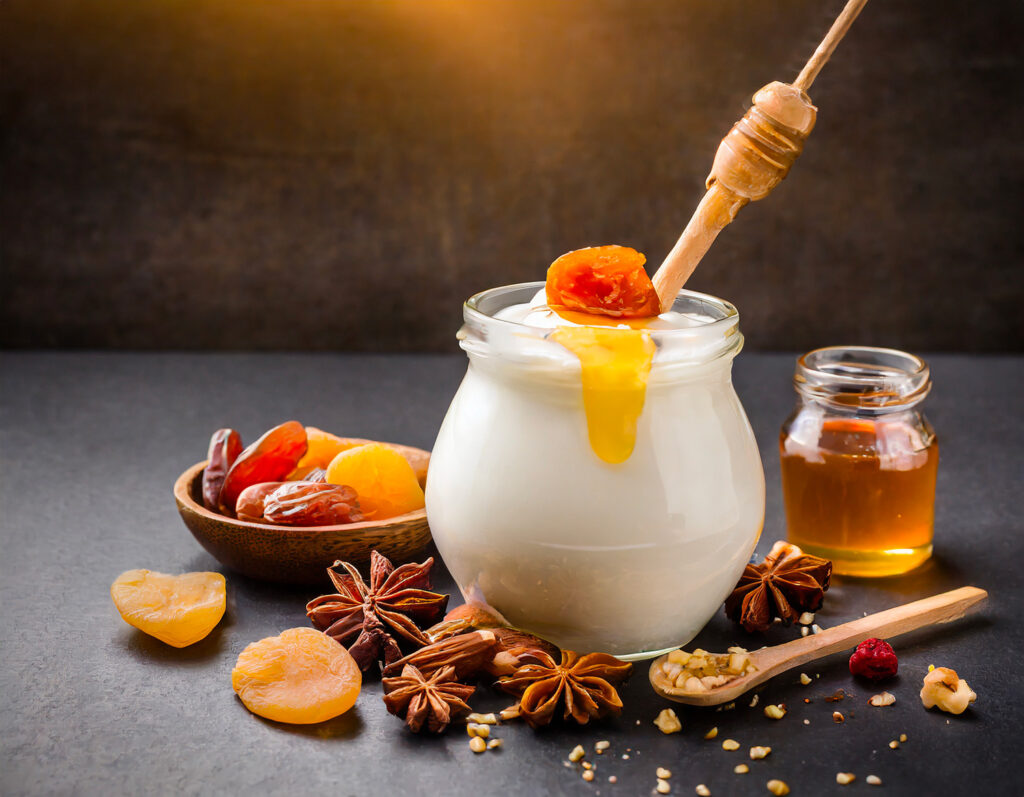
- Yaourts nature avec un soupçon de miel : une option savoureuse qui permet de contrôler la quantité de sucre ajouté.
- Barres de céréales maison : faites avec des ingrédients naturels, elles peuvent être une collation sucrée et nutritive.
- Smoothies aux fruits : une manière délicieuse de combiner les fruits et d’autres ingrédients sains pour un snack sucré mais équilibré.
Comment lire les étiquettes ?
Comprendre les étiquettes alimentaires est crucial pour faire des choix éclairés. Voici comment décrypter les informations sur les emballages des bonbons sans sucre :
- Liste des ingrédients : les ingrédients sont énumérés par ordre décroissant de quantité. Recherchez la présence d’édulcorants, d’arômes et de conservateurs.
- Informations nutritionnelles : vérifiez la teneur en calories, en glucides, en graisses et en protéines pour évaluer l’impact nutritionnel du produit.
- Identifier les édulcorants : apprenez à reconnaître les différents types d’édulcorants utilisés, comme l’aspartame, la stévia, ou les alcools de sucre.
- Attention aux allégations : méfiez-vous des allégations comme « sans sucre » ou « faible en calories », et comprenez ce qu’elles signifient réellement.
Conclusion : faire des choix éclairés
Résumé des points clés
Alors que nous clôturons notre exploration des bonbons sans sucre, il est important de se remémorer les points clés pour une prise de décision avisée :
- Composition des bonbons sans sucre : ils remplacent le sucre traditionnel par des édulcorants artificiels ou naturels, chacun ayant ses propres impacts sur la santé.
- Valeur calorique : bien que souvent inférieure à celle des bonbons traditionnels, la valeur calorique des bonbons sans sucre n’est pas négligeable et doit être prise en compte dans une gestion du poids consciente.
- Effets sur la santé : les avantages incluent une réduction du risque de caries et une meilleure adaptabilité pour les diabétiques, tandis que les inconvénients comprennent des réactions métaboliques potentielles et des troubles digestifs liés à certains édulcorants.
- Consommation modérée : la modération est essentielle, même avec des produits sans sucre, pour maintenir un équilibre alimentaire et éviter les effets indésirables.
L’importance de l’équilibre alimentaire
Une alimentation équilibrée est fondamentale pour une bonne santé. Les bonbons, qu’ils soient avec ou sans sucre, doivent être considérés comme une petite partie de notre régime alimentaire global, et non comme un élément central. L’intégration des bonbons sans sucre dans une alimentation doit être faite de manière judicieuse, en prenant soin de ne pas remplacer des aliments nutritifs par des douceurs moins nourrissantes.
Il est important de se rappeler que la variété et la modération dans l’alimentation sont essentielles. Des fruits frais, des légumes, des protéines, des grains entiers et des graisses saines doivent constituer la majeure partie de notre alimentation. Les bonbons sans sucre peuvent être un plaisir occasionnel, mais ils ne devraient pas détourner l’attention d’une alimentation riche en nutriments essentiels.
Ouverture vers un nouveau sujet : le thé et le ventre plat
En continuant sur le thème d’une alimentation saine et des mythes qui l’entourent, une question courante se pose souvent : le thé peut-il contribuer à obtenir un ventre plat ? Cette question, entourée de nombreuses spéculations et croyances, mérite une exploration détaillée. Restez à l’affût pour notre prochain article, où nous plongerons dans l’univers du thé, examinant ses propriétés, ses bienfaits potentiels pour la santé et son rôle dans la gestion du poids.